Buying Guide
How to Buy Original Paintings Online: A Practical Guide for Serious Buyers
11 April 2026
Buying original paintings online is now genuinely normal for serious collectors and interior buyers. The auction platforms, gallery sites, direct artist shops, and art marketplaces that have developed over the last decade have made it possible to acquire significant work without setting foot in a gallery district in a major city.
But wider options don’t automatically mean easier decisions. The online art market has a lot of good purchases in it — and a lot of overpriced, misrepresented, and simply mediocre ones. The best purchases still come from asking better questions before you pay. Knowing what you’re looking at, what the price actually reflects, what documentation you’re owed, and how the shipping and delivery process should work.
This guide covers the whole process: how to evaluate an artist and a work before committing, how to read price signals, what authenticity documentation looks like, how shipping of original paintings should be handled, why buying directly from the artist is better than buying through intermediaries in almost every case, and what the process looks like when it’s done well.
It’s written from the artist’s side of this transaction — which means it’s written by someone who has answered every question in it, made every decision in it, and knows what the answers look like when they’re right.
Part One: The Online Art Market — What’s Changed and What Hasn’t
A decade ago, buying a significant original painting online felt like a risk. The expectation was that serious purchases happened in person: in galleries, at auction, at art fairs. Online was for prints, for affordable work, for décor rather than collecting.
That’s no longer the case. Collectors across Europe and the US now routinely acquire original paintings entirely online — sometimes sight unseen, sometimes after a video call with the artist, sometimes with nothing more than a strong body of photographic documentation and a certificate of authenticity. The infrastructure has caught up. Specialist shipping, insured transit, digital provenance documentation — all of it is standard practice now.
What hasn’t changed: the fundamentals of what makes a purchase worth making. A well-documented original from a serious artist with a verifiable track record is a sound acquisition, online or off. A poorly documented painting from an unclear source, at a price that’s hard to justify against any reference point, is a risk — online or off. The medium of the transaction doesn’t change the quality of what’s being transacted.
The online environment has also created new risks specific to it: the difficulty of assessing surface quality from photographs, the ease of misrepresenting edition sizes for prints sold alongside originals, and the distance between buyer and seller that makes some sellers comfortable overstating credentials. These aren’t reasons to avoid buying online. They’re reasons to know what to look for.
Part Two: Evaluating the Artist Before You Look at the Work
The first due diligence step has nothing to do with the painting itself. It’s about the person selling it.
What a verifiable track record looks like
A working artist with genuine credentials is findable. They have a website with a coherent body of work, contact information, and some form of exhibition or professional history. They may have press coverage, institutional collection listings, or a social media presence that shows consistent practice over time — not a recently created account with a handful of posts.
This doesn’t mean you need to find a Wikipedia entry or a blue-chip gallery representation. Many of the most interesting artists working today sell directly and don’t operate through gallery systems. But they have a presence. They can be verified. Their work is findable across multiple sources that weren’t all created last month.
For Marta Ellie specifically: twenty years as a professional art restorer, documented by the institutions and private collections she worked with; an art teaching background at an international school; a studio practice that produces a consistent, identifiable body of work in the Abstract Modern and Coastal & Mediterranean series. These are checkable facts, not claims that disappear when you look for them.
Red flags to watch for
No verifiable identity. Sellers with no website, no exhibition history, and only marketplace profiles are unverifiable by design. This may be innocuous — some artists are simply not good at self-promotion — but it’s worth pausing on.
Inconsistent or missing technical details. A serious artist can tell you the medium (oil or acrylic, and on what — canvas, linen, panel), the year of production, the exact dimensions in centimetres, and the varnish or finishing status of the work. If these details are vague, missing, or inconsistent across listings, that’s a signal.
Credential inflation. “Award-winning,” “internationally recognised,” “museum-quality” — these terms are effectively unregulated online and appear on listings ranging from serious artists to mass-production operations. They mean nothing without specifics. Ask which awards, which museums, which international recognition. Legitimate credentials survive this question. Inflated ones don’t.
Prices significantly below market for stated credentials. If an artist claims twenty years of professional practice and a significant collector base, but prices originals at €300–€500, either the credentials are overstated or something else is wrong. Market prices for established artists reflect a track record that took years to build.
Part Three: Evaluating the Work Itself Online
Buying a painting online means making a purchasing decision based on photographs. This is a real limitation, and it’s worth being honest about it. A photograph of a painting is not the painting. Surface texture, the behaviour of light across brushwork, the physical presence of paint on canvas — these are things photography approximates, not reproduces.
But good photography gets you closer than most buyers realise. And bad photography — or strategically chosen photography — tells you something too.
What good photographic documentation includes
Multiple images from different distances. A full-canvas shot from straight-on is the minimum. A serious seller will also provide detail shots showing brushwork and surface texture, a scale reference (the painting photographed with a person or a common object to give a sense of actual size), and — ideally — images taken in natural daylight rather than only in controlled studio or gallery lighting.
Images in real context. A painting photographed in a room, on a wall, against furniture, in natural light — even an approximate staging — tells you more about scale and presence than a white-background product shot. It shows you what the work actually does when it’s in a space rather than isolated against neutral conditions.
Consistent colour across shots. Significant colour variation between photographs of the same work suggests either inconsistent lighting or deliberate misrepresentation of the palette. A work that looks very warm in one shot and very cool in another has been photographed under very different conditions. Ask for clarification before buying.
Asking questions before committing
A serious artist selling directly will answer questions. That’s not a burden they’re tolerating — it’s part of the transaction, and an artist who does this regularly knows that the right buyer asking the right questions leads to a better purchase and fewer problems after delivery.
Useful questions before buying an original online:
- Can you send additional photographs, specifically showing the surface texture in raking light?
- How does the palette behave in strong natural light vs artificial light?
- What is the finishing status — is it varnished, and if so with what?
- Is the canvas ready to hang, or does it need stretching or framing?
- Are there any condition notes — any areas of repair, reworking, or surface variation worth knowing about?
These are not intrusive questions. They’re the questions any informed buyer should ask, and an artist who hesitates to answer them is an artist worth hesitating about.
Part Four: Understanding What the Price Reflects
The price range for “original paintings” online spans from €50 to several hundred thousand euros. Understanding what drives price within that range is the difference between buying with confidence and buying on hope.
The four main price factors
Size. The most direct variable. A 200×150 cm canvas requires more material, more time, and more sustained physical engagement than a 50×50 cm work. This relationship is roughly linear for established artists — their price-per-square-centimetre tends to be consistent within their range. A very large work at the same price as a very small one from the same artist is worth questioning.
Medium. Oil on canvas is more expensive to produce than acrylic on canvas — the materials cost more, and oil’s drying time means a work may take weeks of active painting time rather than days. Oil paint also develops surface quality over time (the way light moves through the layers deepens as the paint cures) in a way acrylic doesn’t. Oil commissions from professional artists typically run 20–40% higher than equivalent acrylic works. Both are legitimate; the difference is real.
Complexity and commission brief. A studio piece — a painting produced independently from the artist’s own exploration — is priced for what it is. A commissioned original involves additional time: the initial brief conversation, any development work or reference material, potentially a revised colour study before the full work begins. Commission pricing reflects this additional investment on the artist’s part.
The artist’s track record. This is the most important factor and the one most misunderstood. An artist with twenty years of professional practice, documented collector relationships, and a coherent body of work is not more expensive arbitrarily. Their prices reflect the accumulated value of that track record — the credibility it adds to the provenance of the work, the confidence it gives a buyer about long-term value, and the market position that makes resale predictable rather than speculative.
For buyers who don’t want to spend at the original painting level, the right alternative is a quality limited edition print from the same artist — not a cheaper original from an artist with no verifiable track record. The former has genuine value. The latter is a gamble.
Price ranges for Marta Ellie’s work
| Work type | Price range | Context |
|---|---|---|
| Limited edition giclée print (120×120 cm) | €300–€500 | 20-copy edition, archival canvas, signed |
| Original commissioned painting (small) | €3,000–€5,000 | Bedroom, study, secondary statement space |
| Original commissioned painting (medium) | €5,000–€7,000 | Main living room, entrance hall |
| Original commissioned painting (large) | €7,000–€9,000+ | Monumental scale, architectural brief |
These prices reflect twenty years of professional practice, materials selected for lasting quality, and work that takes weeks rather than hours. They are not gallery prices — there is no 40–60% gallery commission in them. They are studio prices, paid directly to the artist who made the work.
Part Five: Authenticity Documentation — What You’re Owed
For any original painting purchased online, three documents should be provided as standard. If a seller describes this as unusual or excessive, they are not operating normally.
Certificate of authenticity
A certificate of authenticity for an original painting should include:
- The artist’s full name and signature
- The title of the work (or a reference number if untitled)
- The medium (e.g. oil on canvas, acrylic on linen)
- The dimensions in centimetres — height × width, and depth if relevant
- The year of production
- Edition information if the work is one of a series
- A photograph of the work, ideally printed or embedded in the document
This document travels with the work and stays with it for as long as it exists. It’s the primary evidence of provenance for any future sale, insurance valuation, or loan. It should be provided without being asked — and if it isn’t, it should be requested before payment.
Invoice
The purchase invoice should list: the title and description of the work, the medium, the dimensions, the year, the agreed price, and the artist or seller’s contact details. This is a legal document as well as an art-world one. It should be on headed paper or a formal template, not a handwritten note.
Shipping documentation
Before the work ships, you should receive confirmation of: the courier being used, the tracking reference, the declared value for insurance purposes, and the expected delivery window. For international shipments, you should also receive any relevant customs documentation — particularly for shipments entering or leaving the UK post-Brexit, where different rules apply.
If any of this is unclear at the point of dispatch, ask before the work leaves the studio. Chasing documentation after a parcel is already in transit is significantly harder.
Part Six: Shipping Original Paintings — What Good Looks Like
Shipping original paintings internationally is standard practice. Artists and galleries do it every day. But packaging quality, insurance coverage, and courier choice vary significantly, and a poorly handled shipment can arrive as a damaged one.
Packaging standards for original paintings
A properly packaged original painting — canvas on stretcher bars — should be:
Corner-protected. Foam or cardboard corner protectors prevent the most common transport damage: impact to the corners of the stretcher bars, which can crack or split.
Surface-protected. Glassine paper or similar archival material directly against the painted surface, followed by bubble wrap. Nothing abrasive directly against the paint.
Double-boxed for large works. A canvas in an inner box, surrounded by foam or packing material, inside a larger outer box. The inner box should not move inside the outer one. Artwork that moves in transit arrives damaged.
Labelled clearly. “Fragile,” “This way up,” “Do not bend” — these markings reduce mishandling. They don’t eliminate it, but they reduce it.
For very large works, specialist art transport is appropriate — a crate rather than a box, with purpose-built internal support. This costs more and takes longer, but it’s the appropriate method for paintings over approximately 150 cm in any dimension.
Insurance
The work should be insured for its full purchase value during transit. This is non-negotiable. International courier insurance policies typically cover a fraction of the declared value unless a specific higher coverage is taken out. Ask what the declared insurance value is, and confirm it matches what you paid.
For works above €5,000, specialist fine art transit insurance — rather than standard courier coverage — is worth asking about explicitly. The difference in premiums is usually modest. The difference in coverage for a claim is significant.
Customs and import duties
For buyers in the EU purchasing from another EU country: no customs duties apply.
For buyers in the UK: post-Brexit rules apply. Original paintings typically qualify for reduced import VAT (5% in the UK rather than the standard 20%) and may be exempt from standard import duty if classified correctly under the relevant commodity code. Ask the seller to declare the shipment accurately and provide the necessary documentation. A seller who is unfamiliar with post-Brexit UK import requirements is a seller who has not shipped to UK buyers before — which is worth knowing.
For buyers in the US: original works of art are generally exempt from US import duties under HTS heading 9701. The seller should provide a commercial invoice with the correct description for customs purposes.
Part Seven: Where to Buy — The Options and Their Trade-offs
Direct from the artist
This is the best route for most serious buyers, and the one this guide is ultimately making the case for. The reasons:
No intermediary margin. Galleries take 40–60% of the sale price. Auction houses charge buyer’s premiums of 15–25% on top of the hammer price, plus seller’s fees on the other side. Marketplaces charge listing and transaction fees that are typically passed through to the buyer via higher prices. Buying direct removes all of this.
Real advice. The artist knows the work. When you ask how a painting behaves in afternoon light, whether a particular piece would suit a warm or cool interior, or whether a format would work above a specific piece of furniture, the answer you get from the artist is informed. The answer from a gallery assistant or a marketplace platform is not.
Cleaner provenance. Documentation goes directly from maker to buyer. There is no chain to verify, no previous sale to account for, no uncertainty about the work’s history before you owned it.
The possibility of adaptation. A direct conversation with an artist can lead to adjustments — a slightly different scale, a palette developed in response to your interior, a variant of a composition you’ve seen in the studio work. None of this is possible through a gallery or marketplace.
Gallery purchases
Galleries add genuine value in specific circumstances: when you want access to an artist who doesn’t sell direct, when you want the additional layer of curatorial due diligence that a reputable gallery provides, or when you’re buying into a secondary market with established auction history.
The cost of that value is real: 40–60% of the purchase price goes to the gallery rather than the artist. For buyers who are comfortable with direct purchases, this is a premium worth avoiding unless the specific gallery access is necessary.
Auction platforms
Online auction platforms — both specialist art platforms and general auction houses — give access to secondary market work: paintings that have previously sold and are now in circulation again. For collectors interested in work that is no longer available from the primary source, this is useful.
The cost structure is unfavourable for straightforward purchases: buyer’s premiums of 15–25% are standard, plus any applicable taxes and transport. For primary market work (buying from a living artist’s current production), auction is almost never the right route.
Art marketplaces
Platforms aggregating thousands of artists and their work have improved significantly. Some have meaningful editorial curation and vetting. Others are more open and require more buyer diligence.
The advantages: wider browsing access, easy comparison across artists and price points. The disadvantages: variable documentation standards, less direct access to the artist, and platform fees that affect pricing.
For buyers who know what they want and have identified the artist they want to buy from, marketplaces add complexity rather than value. They’re most useful for exploration — finding artists you didn’t know about — rather than for executing a purchase you’ve already decided to make.
Part Eight: The Commission Process — Buying an Original Made for Your Space
A commission is a different kind of purchase from selecting an existing studio work. You’re not choosing from what exists; you’re initiating the creation of something that doesn’t exist yet. The process matters.
How it begins
A commission conversation starts with the space. Before palette, before style, before subject: what are the dimensions of the wall? What is the room? How is it lit — what direction do the windows face, what is the quality of natural light across the day? What is the interior palette — wall colours, flooring, textile tones?
With this information, an artist with genuine experience of working to commission can begin to propose what might work. Not a rigid specification — that’s not how painting works — but a direction: a palette range, a composition approach, a scale recommendation.
For Marta’s commissions, this initial conversation happens via the commissions page or by direct contact. The response comes within 48 hours and typically includes: an interpretation of the brief, a scale recommendation, a palette direction, an estimated timeline, and a price range. No obligation at this stage — it’s a conversation about whether there’s a genuine fit.
Development and approval
For commissions above a certain scale, a development stage before the full work begins can be valuable. This might be a colour study — a small-scale exploration of the palette direction — or reference photographs from the studio showing material and approach. It’s not a guarantee of what the final work will look like, but it gives the buyer a more grounded sense of direction before the main canvas begins.
The degree of development stage involvement varies by commission and by buyer preference. Some buyers want minimal involvement and maximum trust in the artist’s judgement. Others want to be close to the process. Both approaches work; what matters is agreeing upfront which it will be.
Timeline
Original commissions from Marta’s studio take typically eight to twelve weeks from confirmed brief to delivery. This varies with scale (larger works take longer), complexity, and current studio workload. Timeline is discussed and agreed at the start of every project, not estimated loosely and adjusted later.
For buyers with a specific installation deadline — a villa completion date, a gift occasion, a project photography schedule — make the deadline explicit at the start of the conversation. It’s almost always possible to plan around a real deadline. It’s impossible to plan around a deadline that isn’t mentioned until three weeks before it.
What happens when the work is complete
Before a commission ships, the buyer receives:
- Final photographs of the completed work in the studio, under natural daylight
- Confirmation of the agreed dimensions
- The certificate of authenticity
- Confirmation of shipping method, insured value, and estimated delivery
At this point, the buyer confirms they’re satisfied with the completed work and the work ships. This is the standard process. It gives the buyer genuine visibility into what they’re receiving before it leaves the studio.
Part Nine: Viewing and Delivery Before You Buy
You can discuss a purchase with Marta remotely. Before ordering, consider how you will view the work, arrange delivery, and hang it in your space.
Delivery planning. Check the shipping information for current print production and delivery estimates. Shipping for an original commission is quoted as part of the commission agreement.
Additional photography. Request detail photographs or images in natural light to understand the work’s surface and colour before you decide.
Placement advice. Share photographs of your room, wall dimensions, and the direction of its light when discussing a commission. These details help Marta suggest a size and palette that suit the space.
Part Ten: Mistakes Buyers Make When Buying Original Art Online
Buying based on price alone
A low price for an “original painting” online is more likely to indicate mass-production or misrepresentation than it is to indicate a genuine bargain. The original painting market does not produce significant work at décor-print price points. If something looks too affordable for its stated credentials, investigate before paying.
Not asking for detail photography
A full-canvas shot tells you about composition and approximate colour. It tells you almost nothing about surface quality, mark-making, or how the work will read up close. Always ask for detail shots — in raking light if possible — before committing to an original.
Ignoring the shipping question
Some buyers complete the purchase and then ask about shipping. The shipping question — packaging method, insurance value, courier, timeline — should be answered before payment. After payment, your leverage on these details is significantly reduced.
Buying at the wrong scale
This applies to originals as much as prints. An original painting at the wrong scale for the wall it’s intended for is no more effective than a print at the wrong scale. Confirm the dimensions work for the space — using the 60–75% furniture-width principle — before falling in love with the work.
Skipping the documentation request
Authenticity documentation should be provided without prompting from a legitimate seller. But if it isn’t, buyers sometimes hesitate to ask — worried about appearing difficult or untrusting. Don’t hesitate. The certificate, the invoice, the shipping documentation — these are standard and you’re owed them. Asking for them is not an insult. Not providing them is.
Frequently Asked Questions
Is it safe to buy original paintings online? Yes, from verified artists and sellers with clear documentation, insured shipping, and transparent terms. The online art market has matured significantly. Risks remain, but they’re manageable with basic due diligence — the same due diligence you’d apply to any significant purchase.
How do I verify an original painting is authentic? Request a signed certificate of authenticity naming the work, medium, and dimensions; a purchase invoice; and clear provenance from the artist. These should be provided as standard. If they’re not, ask. If the seller is reluctant, that tells you something.
What is a fair price for an original painting from an established artist? For artists with 15+ years of professional practice and a documented collector base, original paintings typically start in the €2,000–€4,000 range for smaller works and scale with size and complexity. Commissioned work is typically priced higher than studio pieces due to the consultation and development involvement. Work significantly below this from an artist claiming comparable credentials is worth investigating.
Should I buy from a gallery, a marketplace, or directly from the artist? For primary market purchases — buying from a living artist’s current production — direct is almost always better. No intermediary margin, genuine advice, clean provenance. Galleries and marketplaces add value in specific circumstances (secondary market access, browsing discovery) but those circumstances don’t apply to most straightforward purchases.
Can I request a different size or format for an existing painting? For original commissions, yes — any size is possible. For limited edition prints, the editions are produced in the standard 120×120 cm format, which suits most contemporary wall contexts. Non-standard print formats aren’t available as they require separate production runs.
Do you offer returns on original paintings? Original commissions are made specifically for the buyer, to a brief agreed upfront, and are not returnable in the conventional sense. The approval stage before shipping — where the buyer confirms satisfaction with the completed work — is the point at which any concerns are raised. For limited edition prints, Marta’s standard terms include a satisfaction process for works damaged in transit.
How do I start? For prints: browse the collection. For an original commission: use the commissions page or get in touch directly. First conversation carries no obligation.
What to Do Next
If you’ve read this far and you’re ready to buy: the prints collection shows everything currently available, with dimensions, edition status, and pricing. Some editions have already sold through. When a 20-copy edition closes, it closes.
If you have a specific space in mind and want to discuss an original commission: the commissions page is where to start. Share the wall dimensions, a description or photograph of the space, and any palette constraints. Marta responds within 48 hours.
If you’re still in research mode, these guides cover the adjacent decisions:
- Abstract wall art: choosing pieces that transform a room — style and composition decisions for abstract work specifically
- Large canvas art for living rooms — sizing and placement in detail
- Original paintings vs art prints — honest comparison for buyers deciding between the two
- How to commission a painting — what the commission process looks like from first contact to delivery
- Why buying art directly from artists matters — the full case for cutting out intermediaries
Prints ship worldwide, fully insured. Commission enquiries answered within 48 hours.
From the collection
Prints related to this guide
Limited editions of 20 · Giclée on 365 g/m² canvas · Signed by Marta Ellie
Abstract & Modern
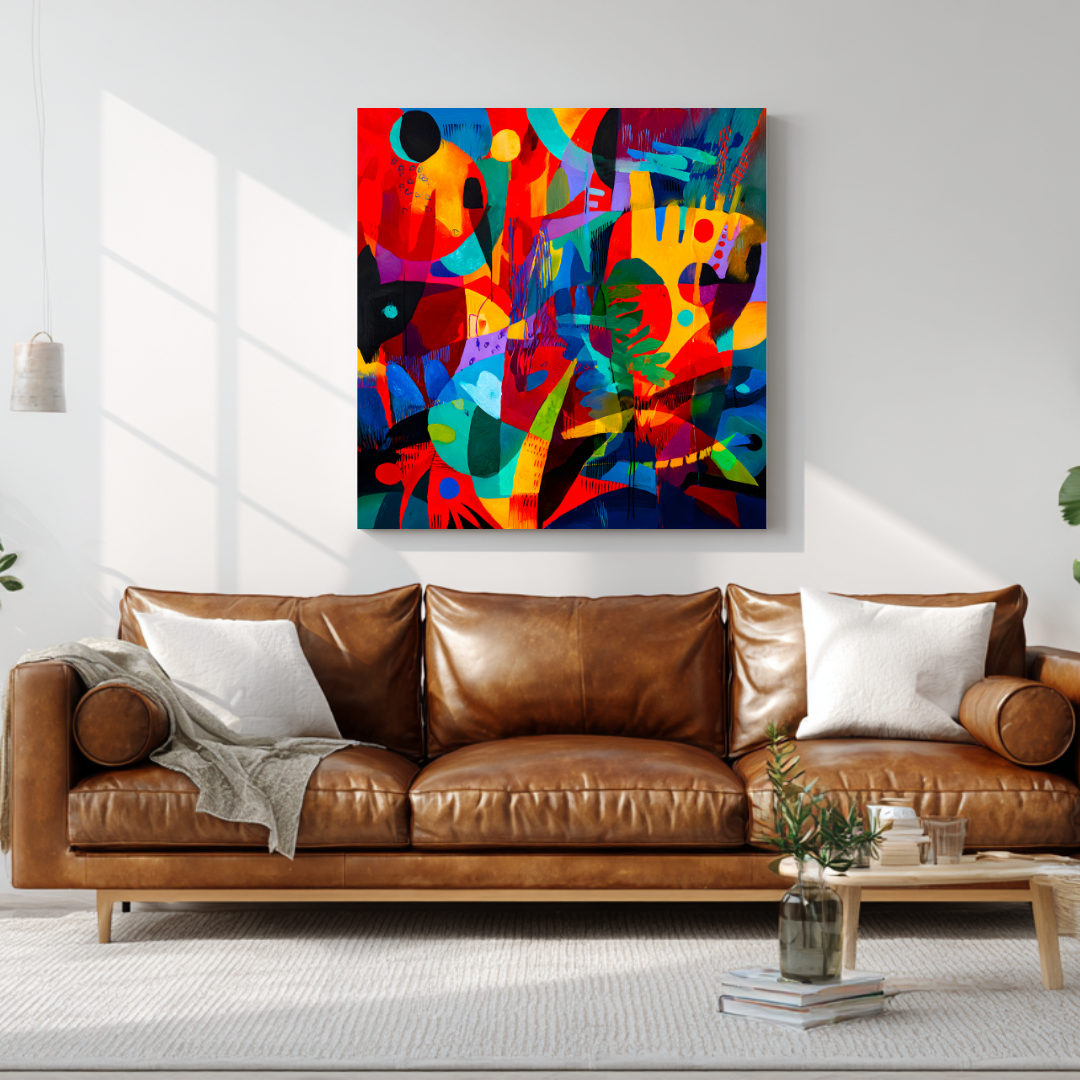
Metamorphosis
€325
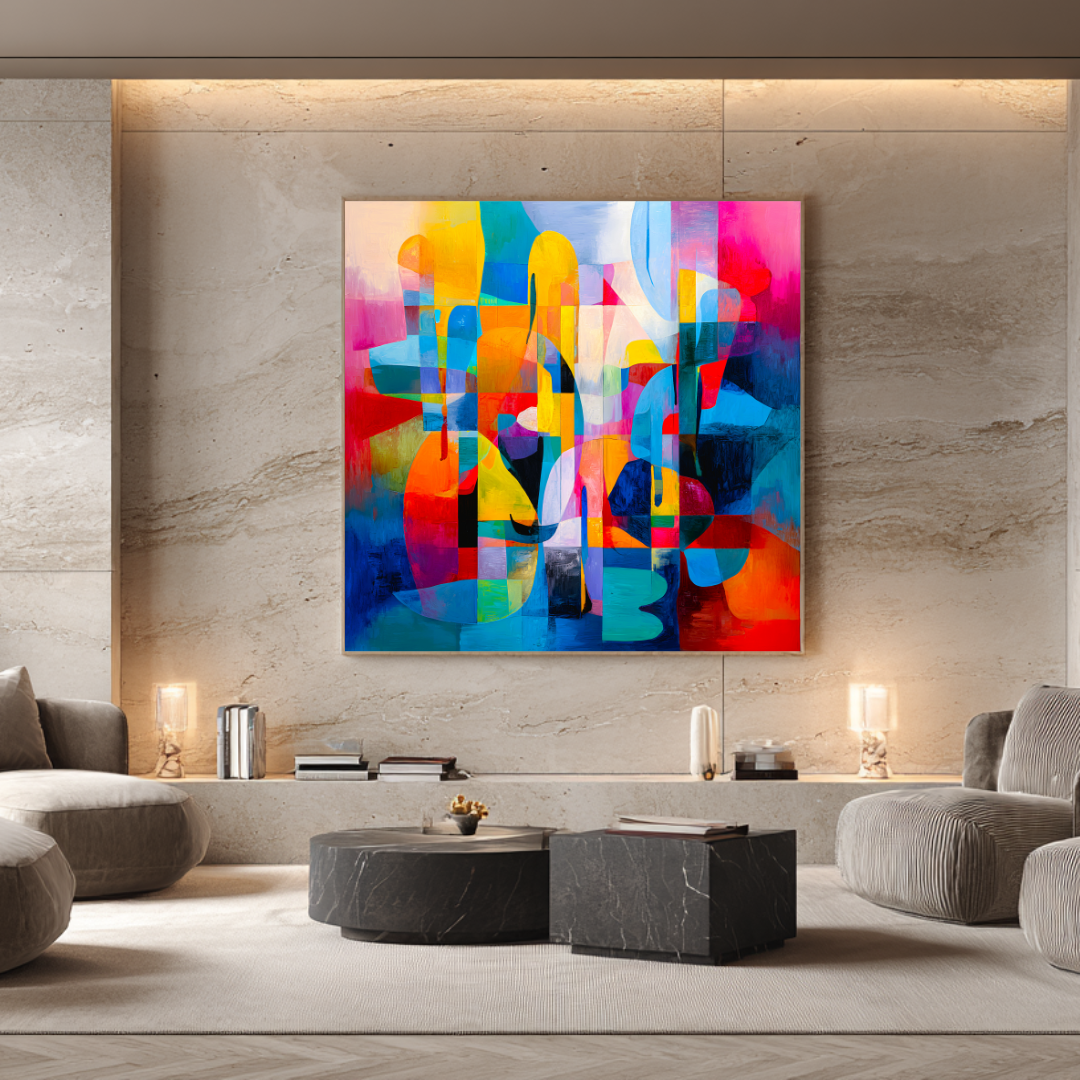
Abstract & Modern
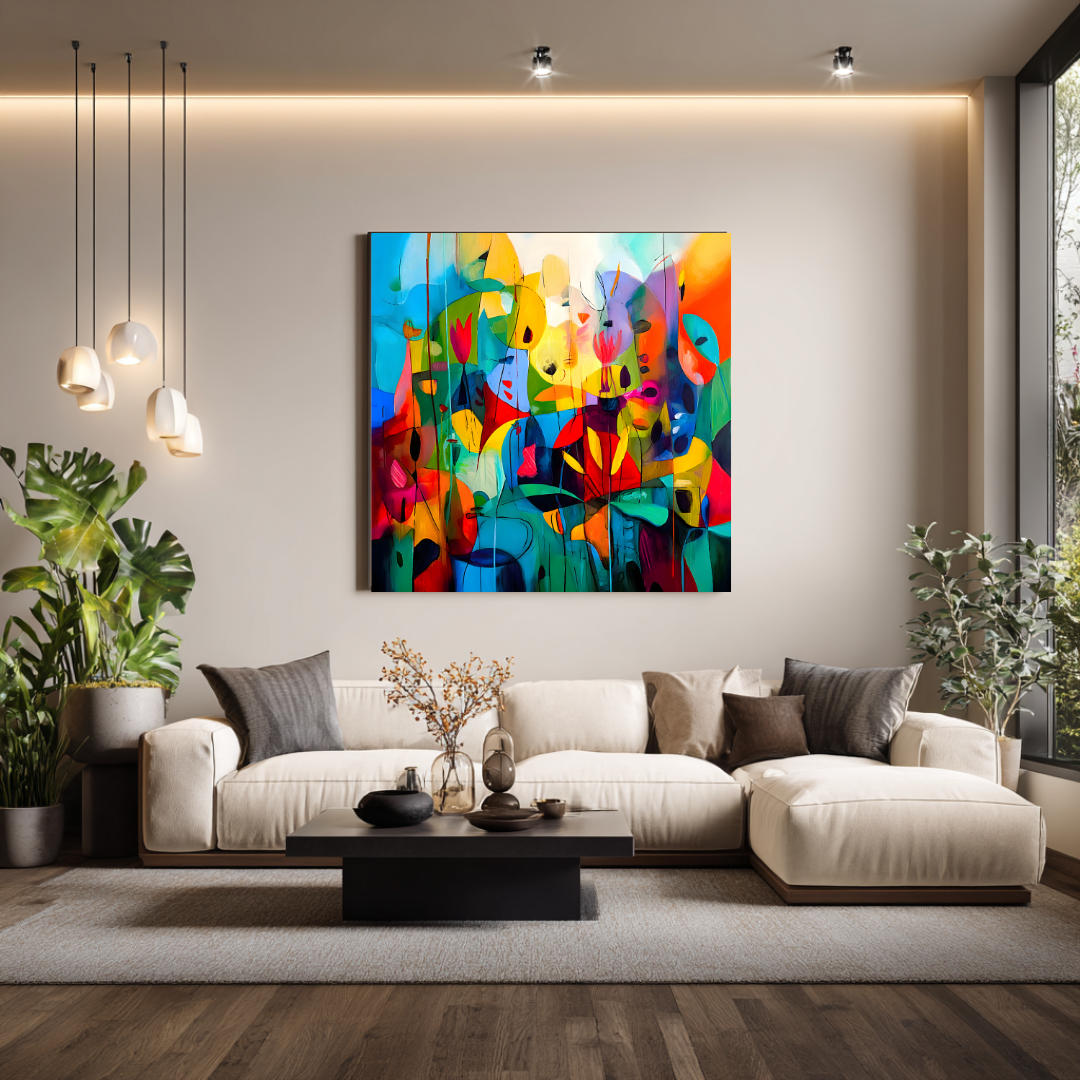
Dreams
€300
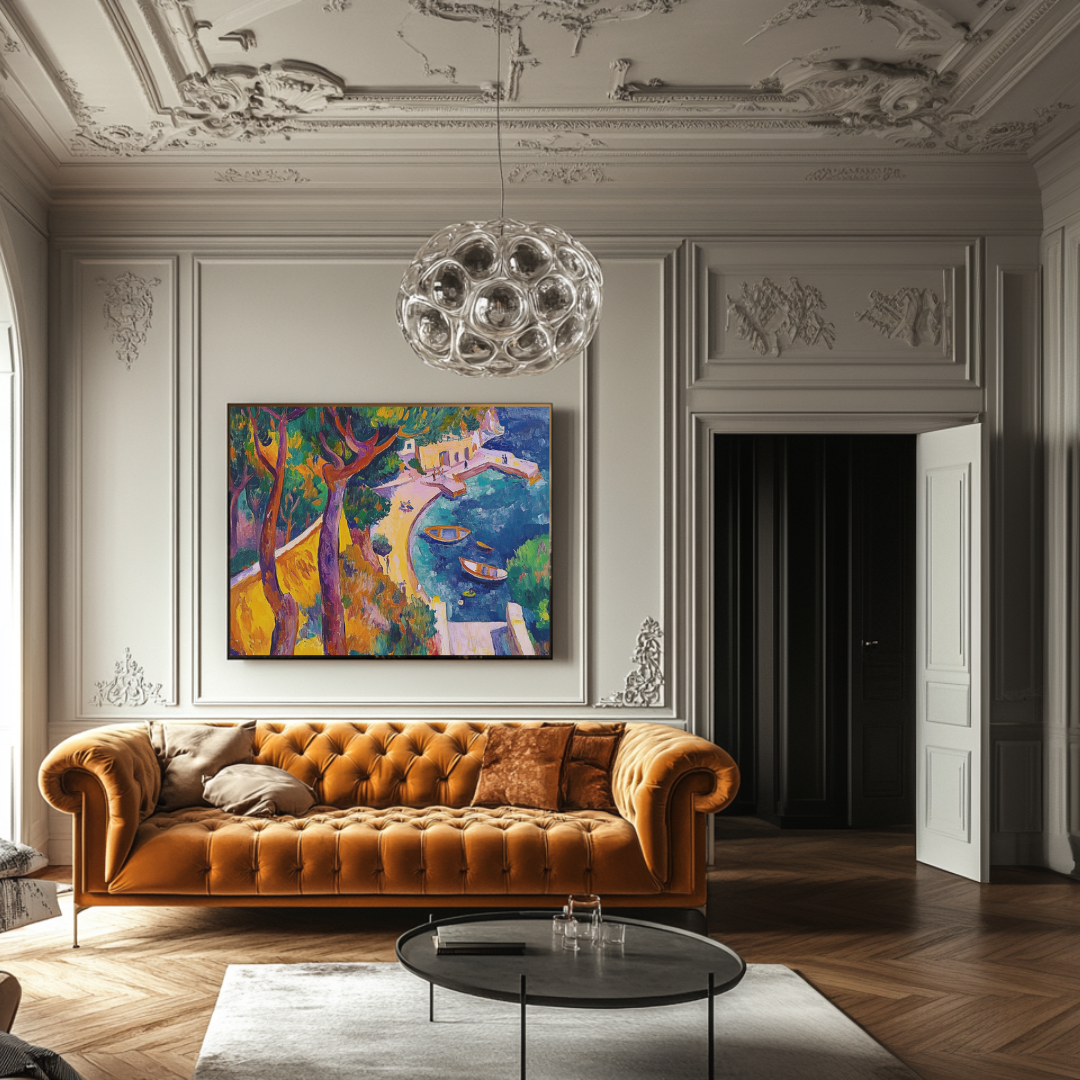
Coastal & Mediterranean
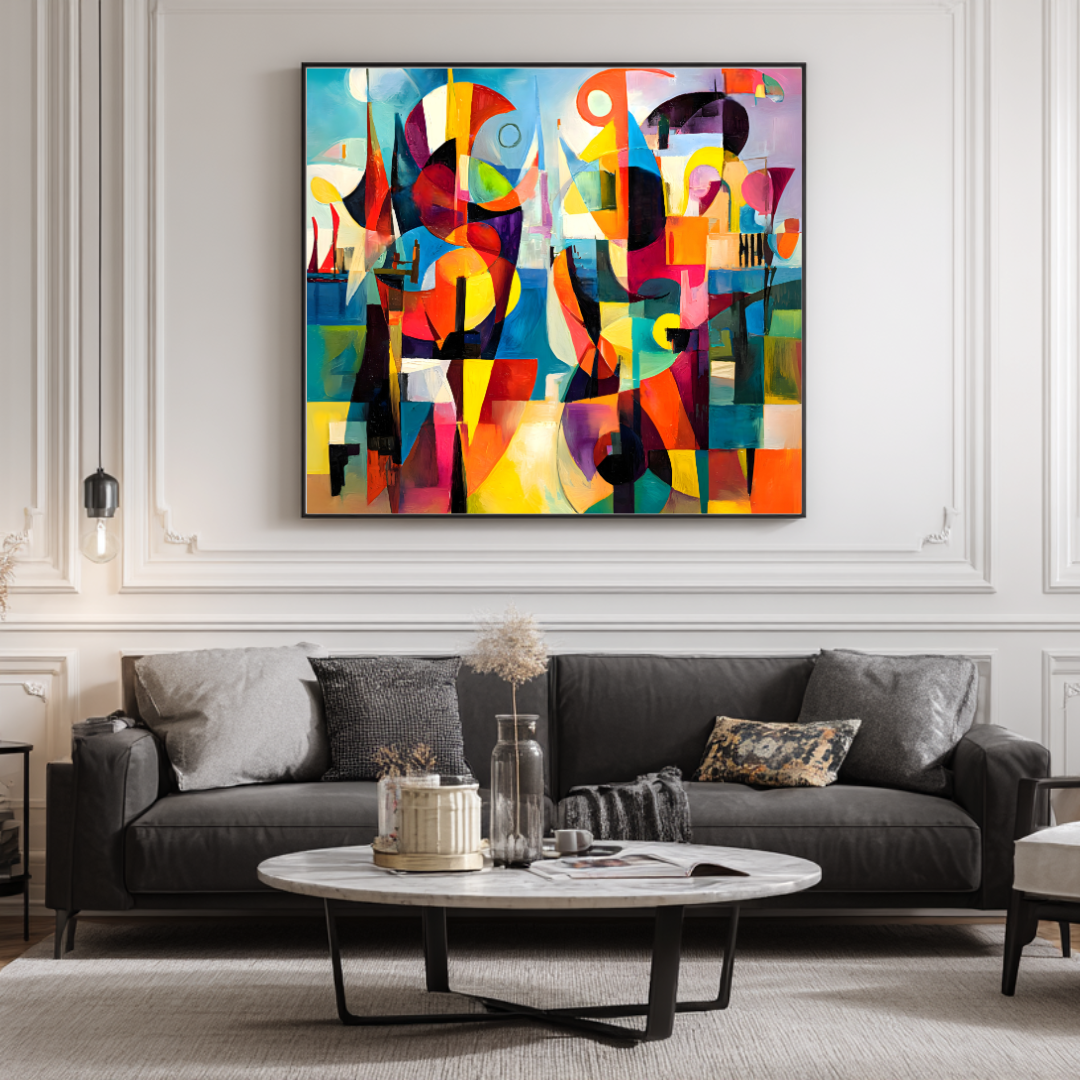
Harbor of Dreams
€350
Read next
Ready to find yours?
Museum-quality prints, from €300.
Limited editions of 20. Giclée on 365 g/m² canvas. Shipped worldwide.
More articles