Buying Guide
Large Wall Art vs Gallery Walls: What Works Best?
20 March 2025
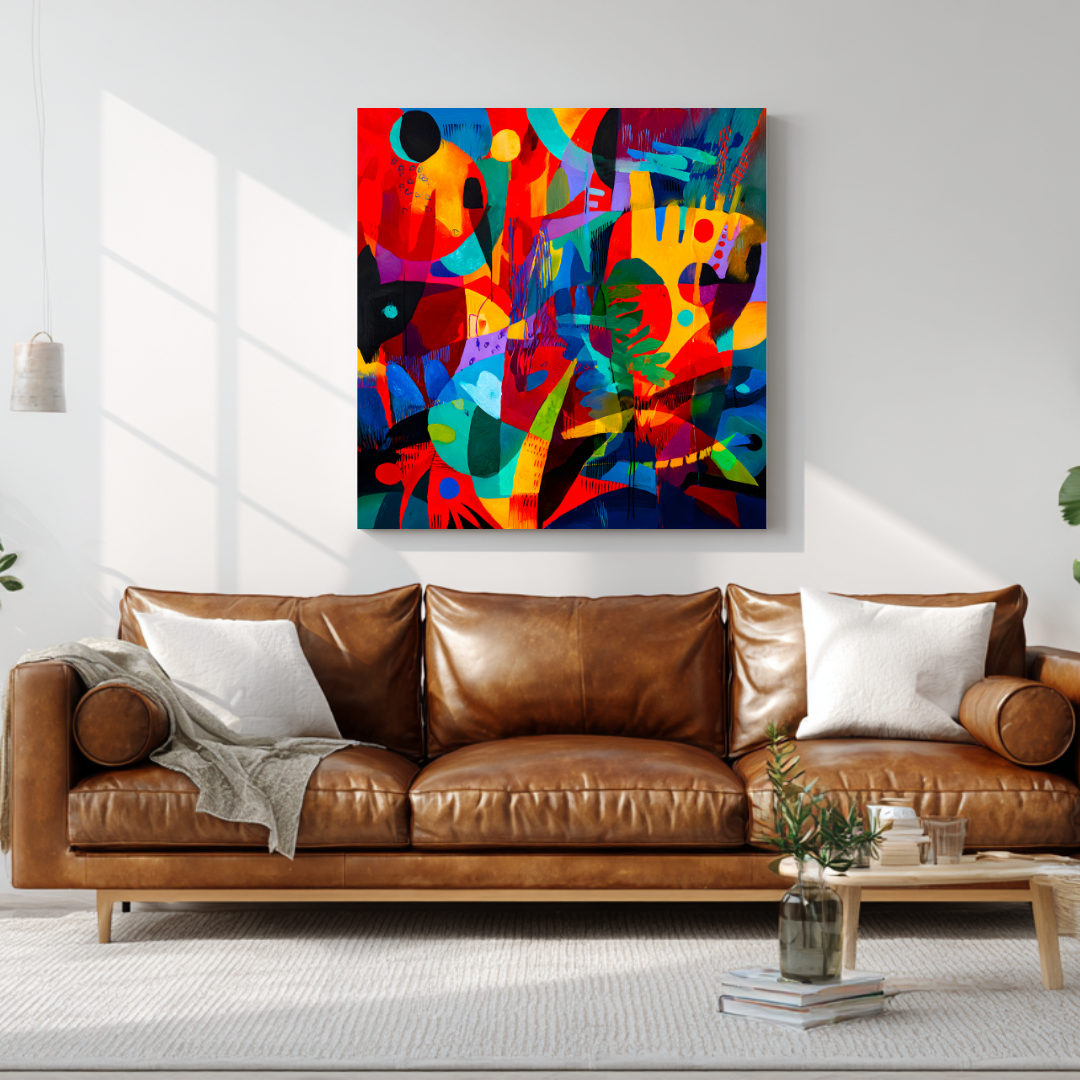
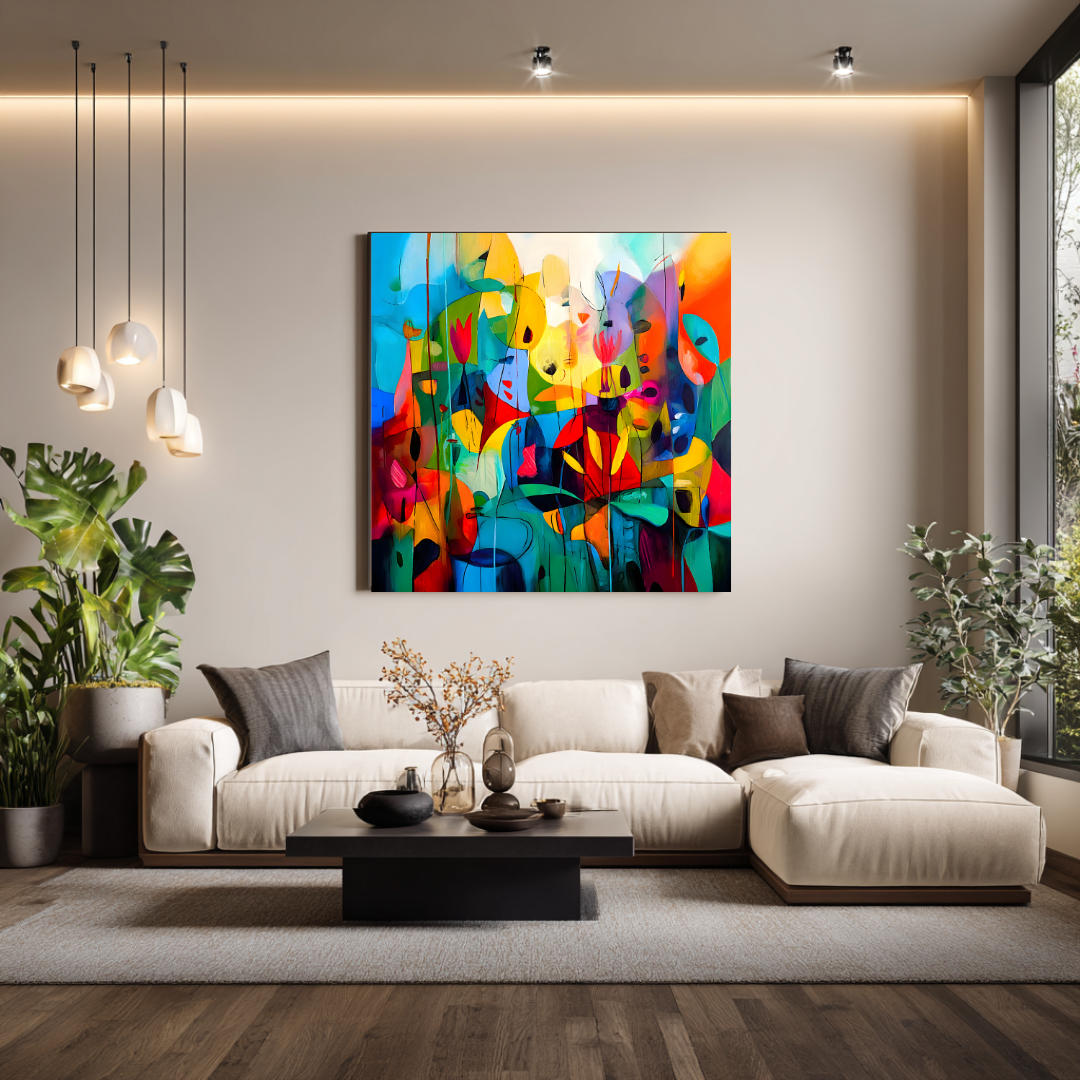
It’s one of the most common decorating decisions people face — and one of the most argued about in interior design circles. Should you fill a large wall with a single statement canvas? Or arrange a collection of smaller pieces into a gallery wall?
Both can look extraordinary. Both can look wrong. The answer depends on your room, your taste, your patience, and what you actually want the wall to do.
This is an honest breakdown of both approaches — when each works, when each fails, and how to execute either one well.
The Case for Large Wall Art
A single large canvas on a significant wall is the cleaner, more contemporary choice. It makes a decisive visual statement. It’s easier to get right. And when it works, it transforms a room with the authority of a single confident decision.
It reads immediately. A large canvas communicates its presence the moment you enter the room. There’s no visual processing required — no hunting for the focal point, no working out how the pieces relate to each other. The wall has a centre of gravity and everything else organises around it.
It suits modern interiors. Contemporary architecture — clean lines, open volumes, minimal ornamentation — tends to respond better to single large works than to collections. A gallery wall in a modern interior can feel busy in a way that fights the architecture rather than completing it.
It ages well. A well-chosen large canvas in a sophisticated palette has no trend association. It simply looks like considered taste.
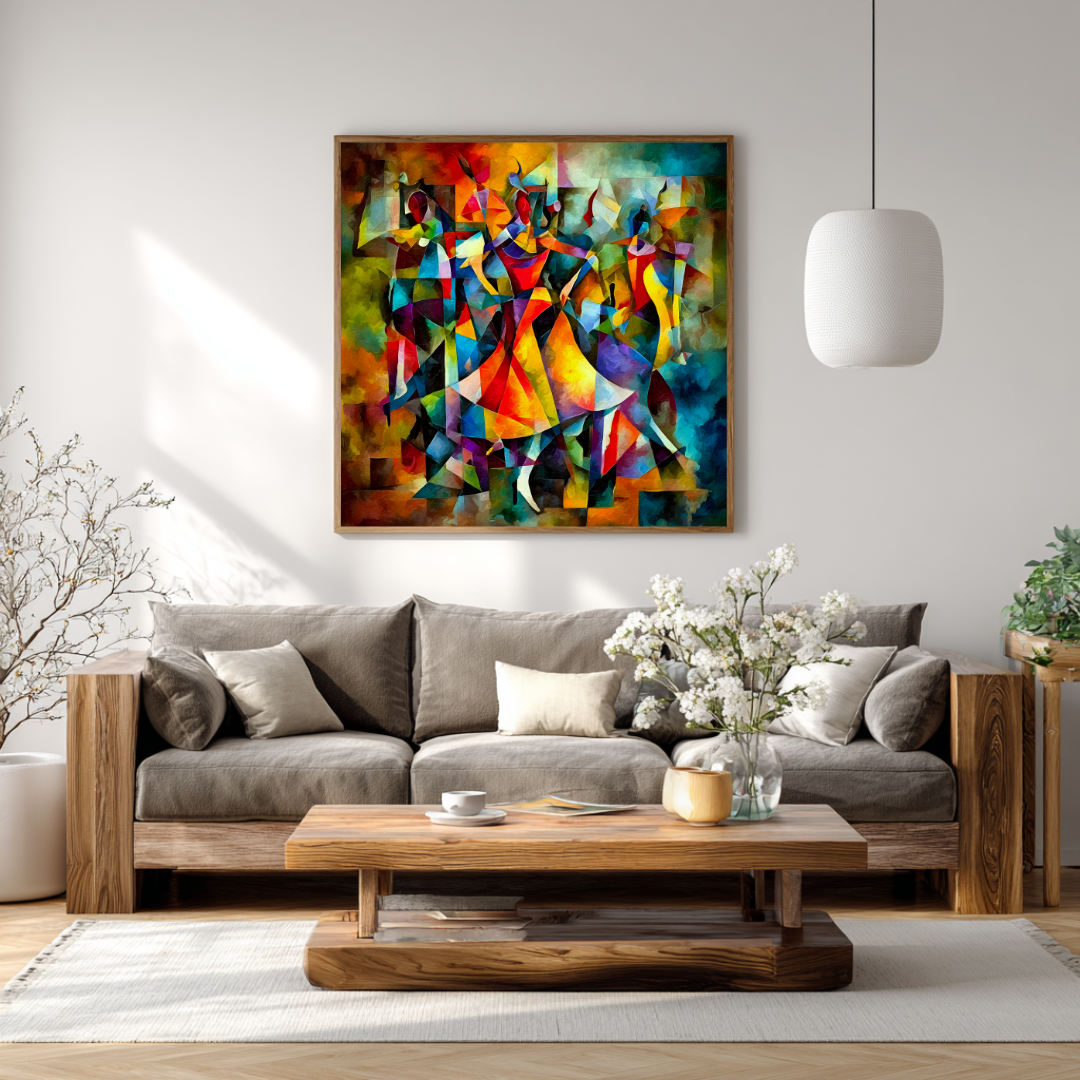 Ballroom — 120×120cm, a statement piece for a contemporary living room
When large wall art fails: Size alone doesn’t make a piece work. A large canvas that’s wrong for the room is harder to ignore than a small one that’s wrong. The larger the format, the more the physical quality of the work matters — surface texture, colour complexity, the sense that the image rewards looking at it closely.
The Case for Gallery Walls
A gallery wall — a curated arrangement of multiple pieces — has its own real strengths. When done well, it reads as personal, collected, and full of history. It tells a story that a single piece can’t.
It works with what you already have. If you’ve accumulated meaningful pieces over time — prints, photographs, small originals, works from travels — a gallery wall is how you show them together.
It suits certain architectural styles. Period homes, apartments with high-ceilinged traditional rooms, interiors with warm, layered aesthetics — these spaces often accommodate gallery walls more naturally than modern minimalist architecture.
It can grow over time. One of the genuine pleasures of a gallery wall is that it’s never quite finished. A piece from a new artist joins the collection. A photograph from a significant trip earns a spot.
When gallery walls fail: When assembled too quickly, when the frames fight each other, or when the pieces have no editorial logic. The gallery walls that look best were almost always built over time — not assembled in a weekend to fill a wall.
Big Canvas vs Multiple Frames: A Direct Comparison
| Large single canvas | Gallery wall | |
|---|---|---|
| Visual impact | Immediate, decisive | Accumulated, layered |
| Ease of execution | High — one decision | Lower — many decisions |
| Best for | Modern, contemporary interiors | Traditional, eclectic, personal |
| Flexibility | Fixed once hung | Can evolve over time |
| What it says | Confidence, clarity | Collected, personal history |
Neither is better. They’re different tools for different rooms and different lives.
How to Execute a Large Canvas Well
Measure before you buy. The most common mistake with large wall art is misjudging scale. Print a paper template and tape it to the wall before committing. You want the canvas to feel substantial — roughly two-thirds the width of any furniture below it.
Give it room to breathe. A large canvas on a wall crowded with furniture and other objects loses its authority. The negative space around the piece is part of the composition.
Choose work with genuine depth. At large scale, surface quality becomes visible. Choose a canvas print produced from an original painting — one with texture, layered colour, the kind of visual complexity that rewards close looking.
For a deeper guide to choosing the right abstract piece for a statement wall, see abstract wall art: how to choose pieces that transform a room.
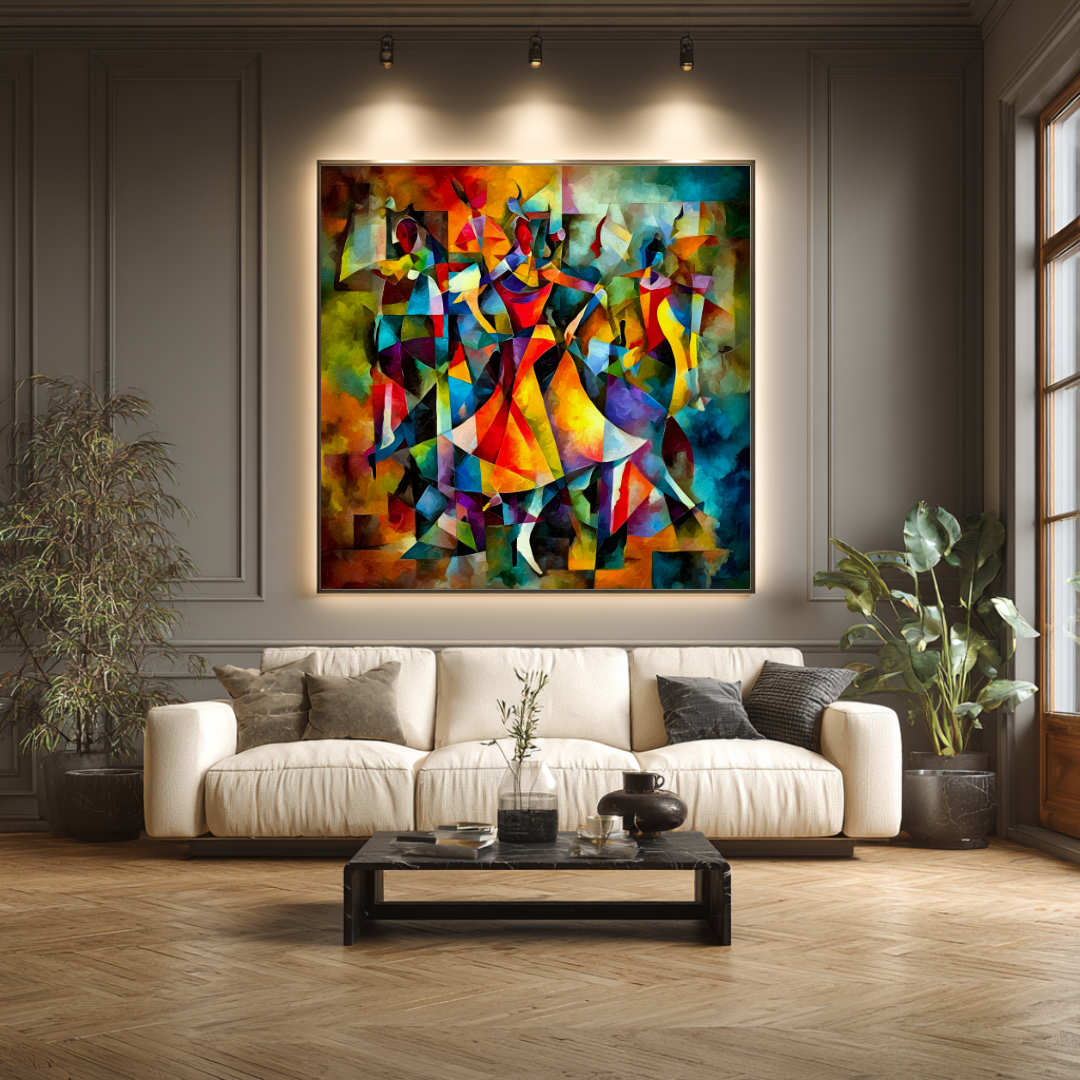
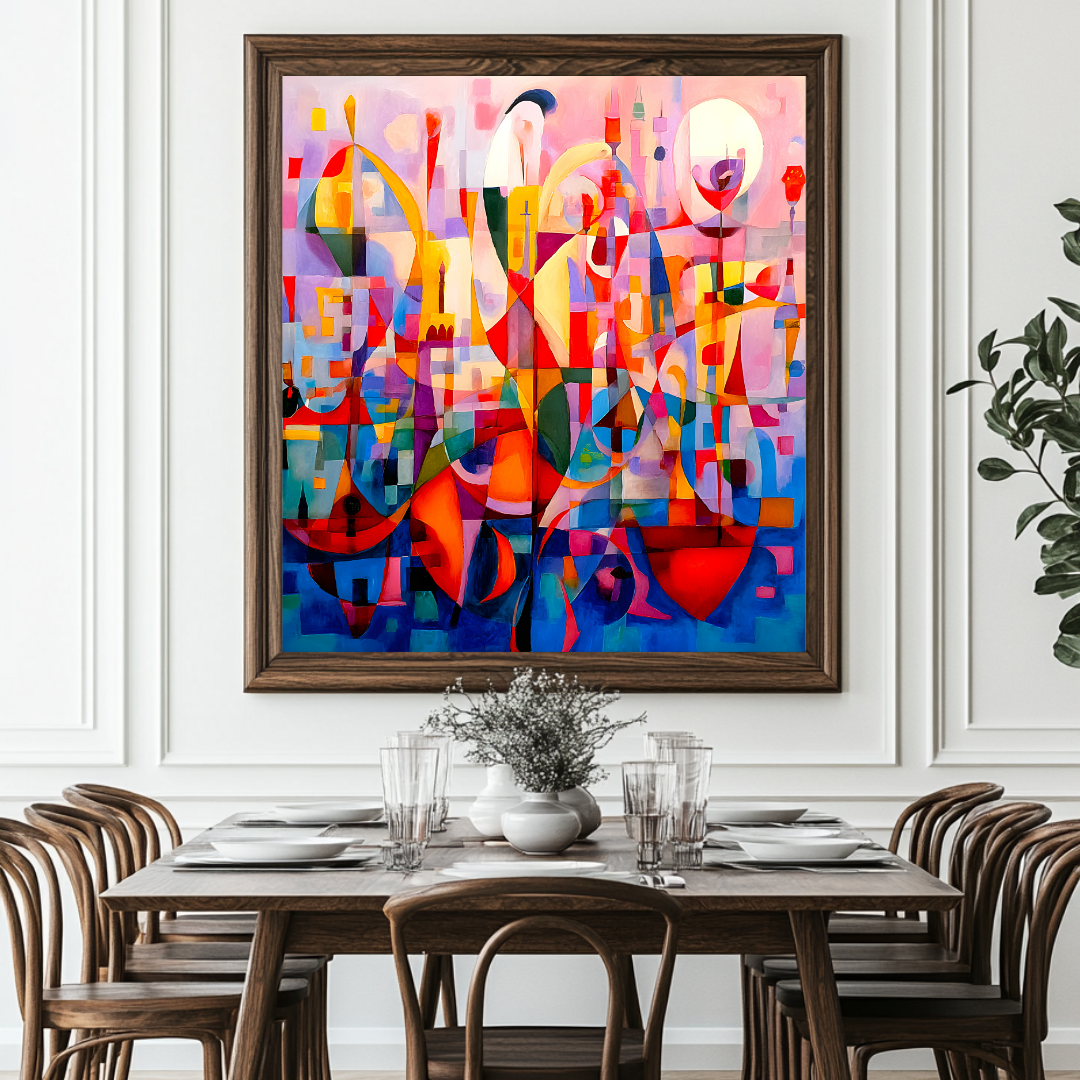 Dancers — shown in context, 120×120cm
How to Execute a Gallery Wall Well
Start with a plan on the floor. Lay the pieces on the floor in your intended arrangement before touching a single nail.
Find the anchor first. Every good gallery wall has one dominant piece from which the other pieces radiate. Find that piece first. Everything else arranges around it.
Maintain consistent spacing. Six to eight centimetres between frames is the standard spacing. Consistent gaps create order; varying gaps create chaos.
Mix sizes deliberately. One large anchor, a few medium pieces, and some smaller works creating rhythm. Avoid all-same-size arrangements, which look mechanical.
Frequently Asked Questions
Is a gallery wall or a large single canvas more on-trend right now?
The maximalist gallery wall that dominated interiors in the early 2020s has given way to a preference for cleaner, more restrained choices. A single large canvas tends to age better as a decision precisely because it’s less associated with a specific moment.
How many pieces should a gallery wall have?
Three to nine pieces is the most manageable range for most walls. Fewer than three feels tentative. More than twelve becomes difficult to control visually.
What size canvas is considered large wall art?
In residential contexts, a canvas of 100×120 cm or larger is generally considered large. Works above 150 cm on the longest side cross into statement territory — appropriate for generous living rooms, open-plan spaces, and walls with significant height.
Can you mix large art and a gallery wall in the same room?
Yes — but in different zones, not on the same wall. A large canvas as the focal point of the main seating area and a curated gallery arrangement on a secondary wall can coexist well if the palette and aesthetic have some coherence.
Whether you’re after a single statement piece for a key wall or building out a collection over time, you can explore Marta Ellie’s canvas print range here — original paintings reproduced to archival quality, signed and available in multiple sizes.
Thinking bigger? Enquire about a commission — original paintings designed for your specific wall.
From the collection
Prints related to this guide
Limited editions of 20 · Giclée on 365 g/m² canvas · Signed by Marta Ellie
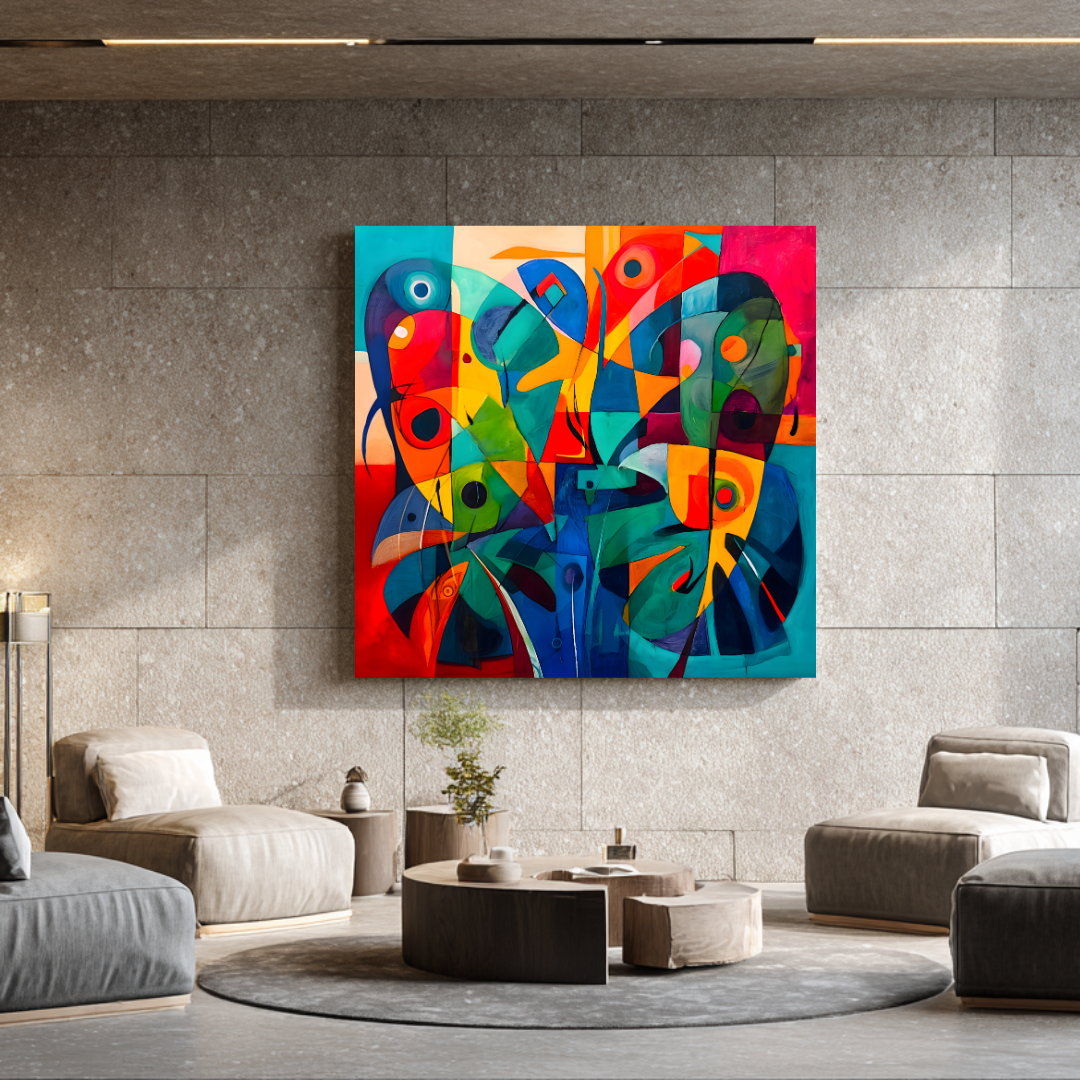
Abstract & Modern
Metamorphosis
€325
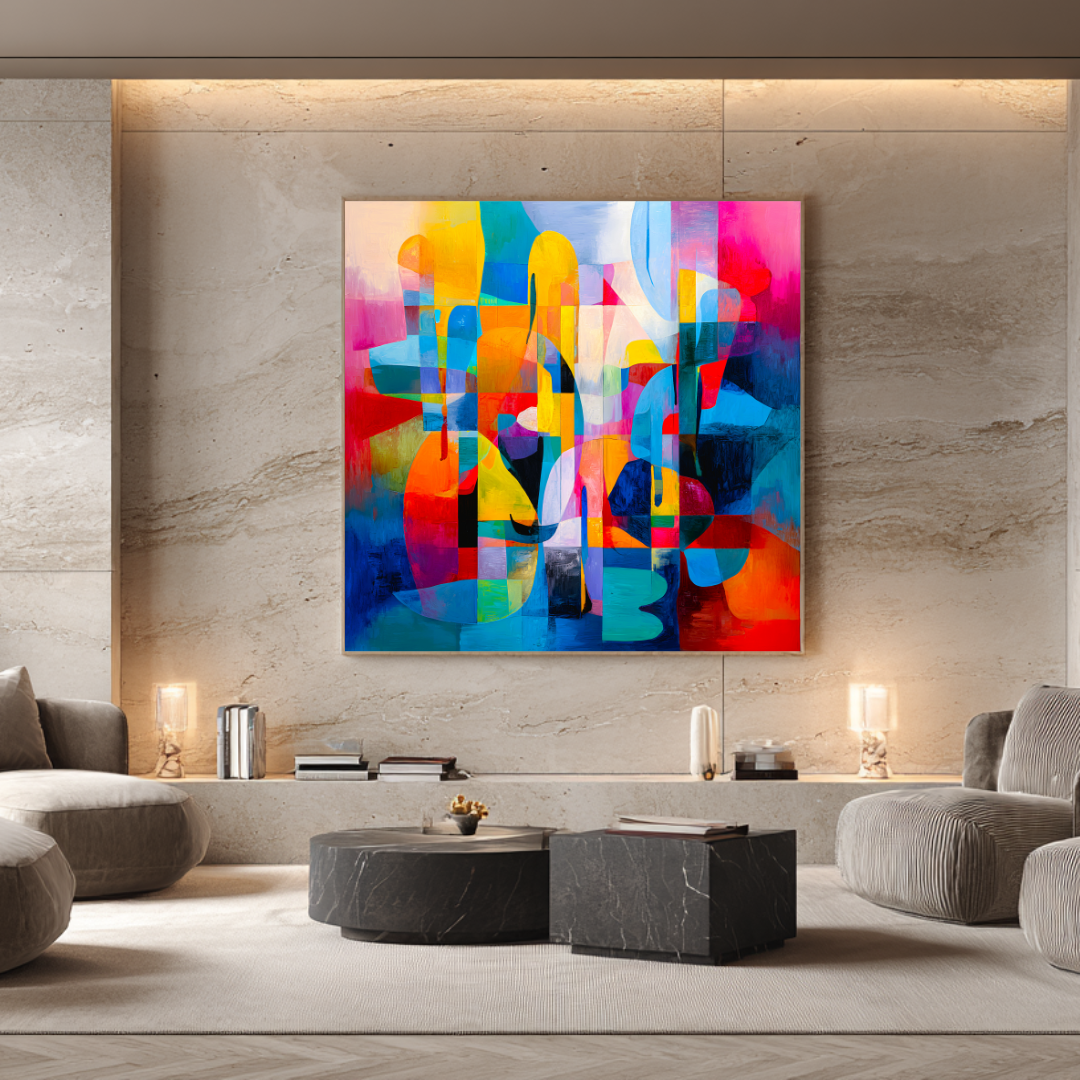
Abstract & Modern
Dreams
€300
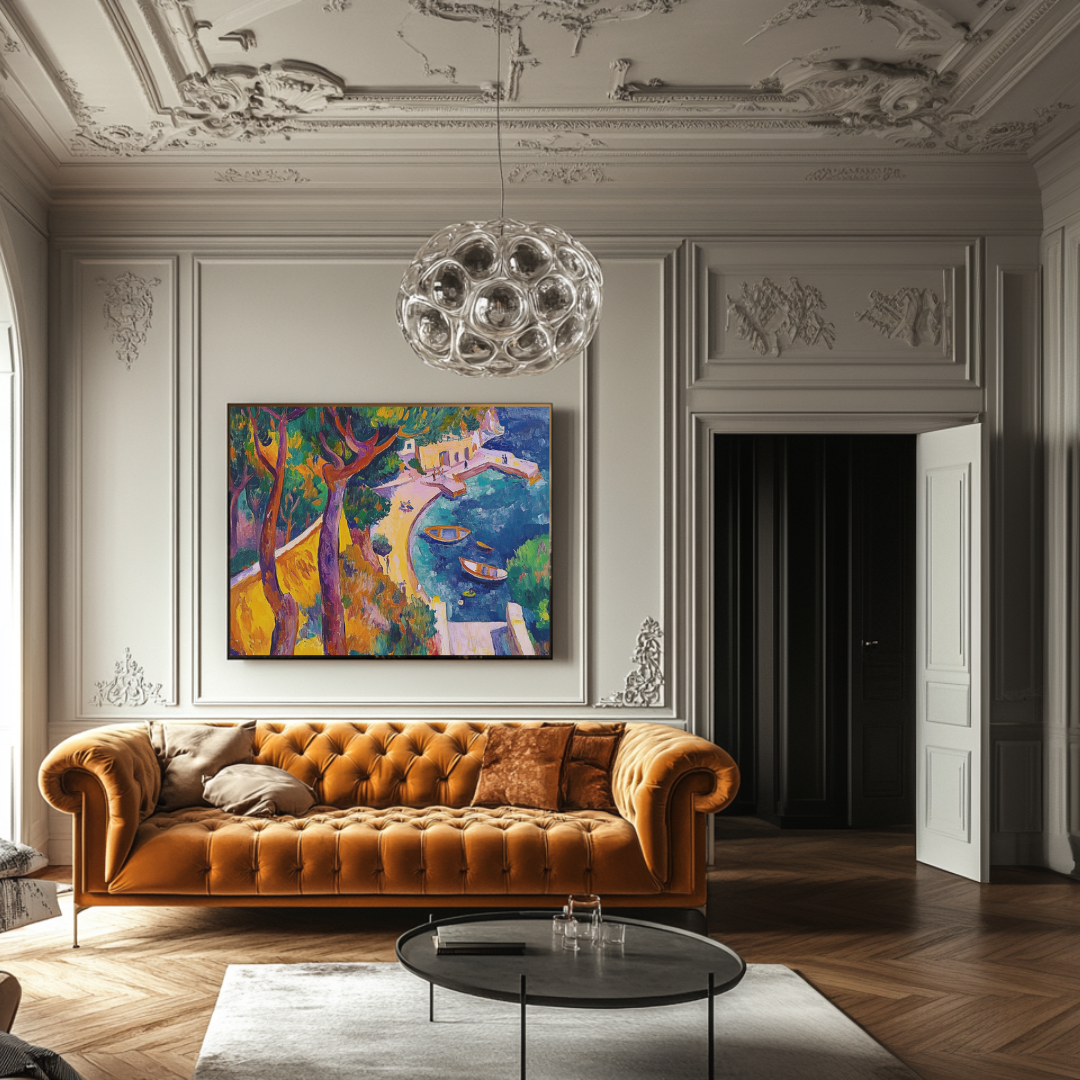
Coastal & Mediterranean
Harbor of Dreams
€350
Read next
Ready to find yours?
Museum-quality prints, from €300.
Limited editions of 20. Giclée on 365 g/m² canvas. Shipped worldwide.
More articles