Buying Guide
How to Choose Art for Your Living Room (Without Overthinking It)
10 March 2025
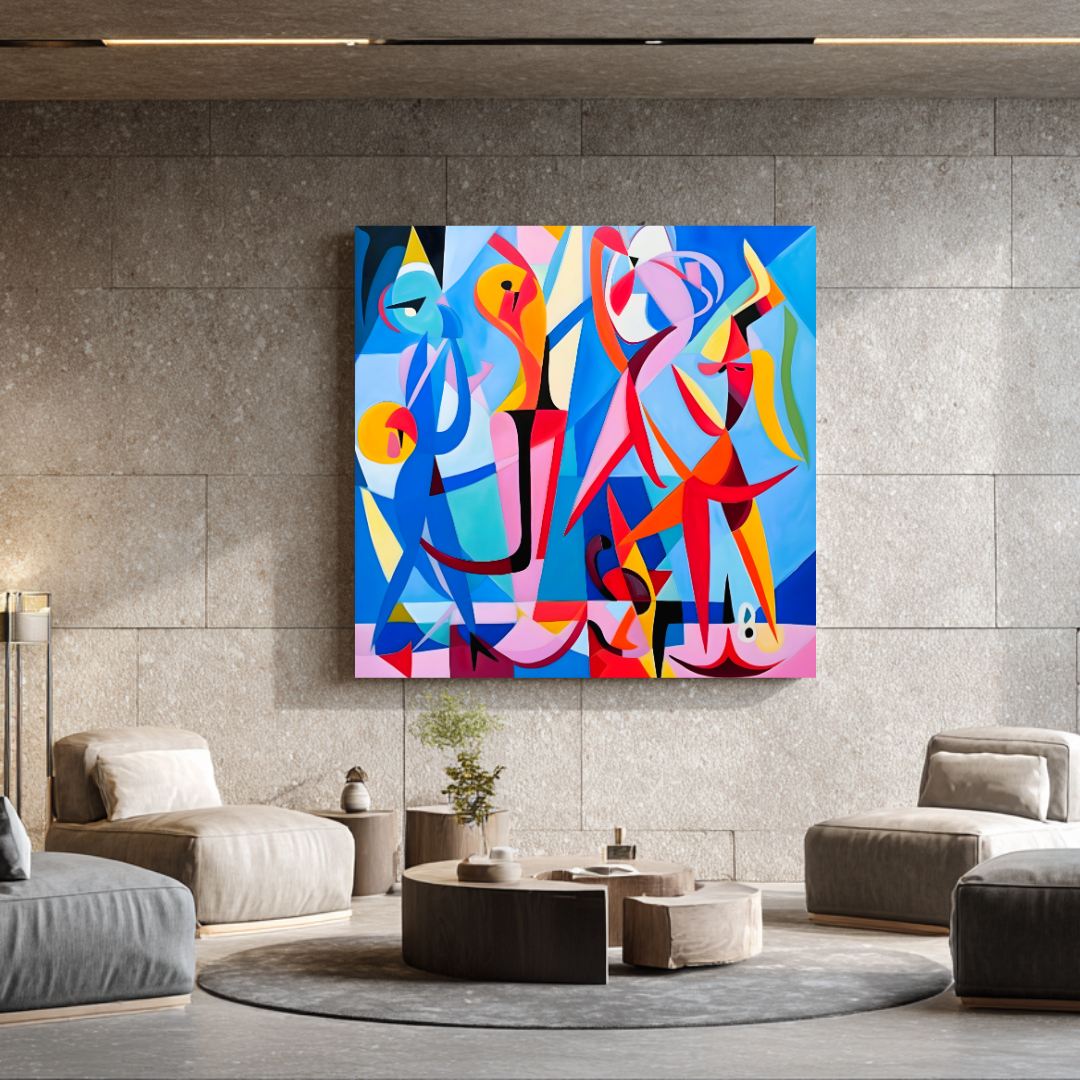
Most people spend months — sometimes years — with a blank wall in their living room. Not because they don’t care. Because they care too much and don’t know where to start.
The options feel overwhelming. The fear of getting it wrong feels real. And somewhere between too many choices and not enough confidence, the wall stays empty.
This guide cuts through it. No interior design jargon, no complicated rules. Just a clear, practical approach to choosing art for your living room that you’ll actually feel good about.
Start With the Wall, Not the Art
The single most common mistake people make when choosing wall art is starting with the art — browsing endlessly online, saving images, falling in love with things that may or may not work in their actual space.
Start with the wall instead.
Stand in your living room and look at it properly. Ask yourself:
How big is it? Measure it. Not roughly — actually measure the width and height of the space where the art will hang. This one step eliminates a huge proportion of wrong choices before you’ve even started looking.
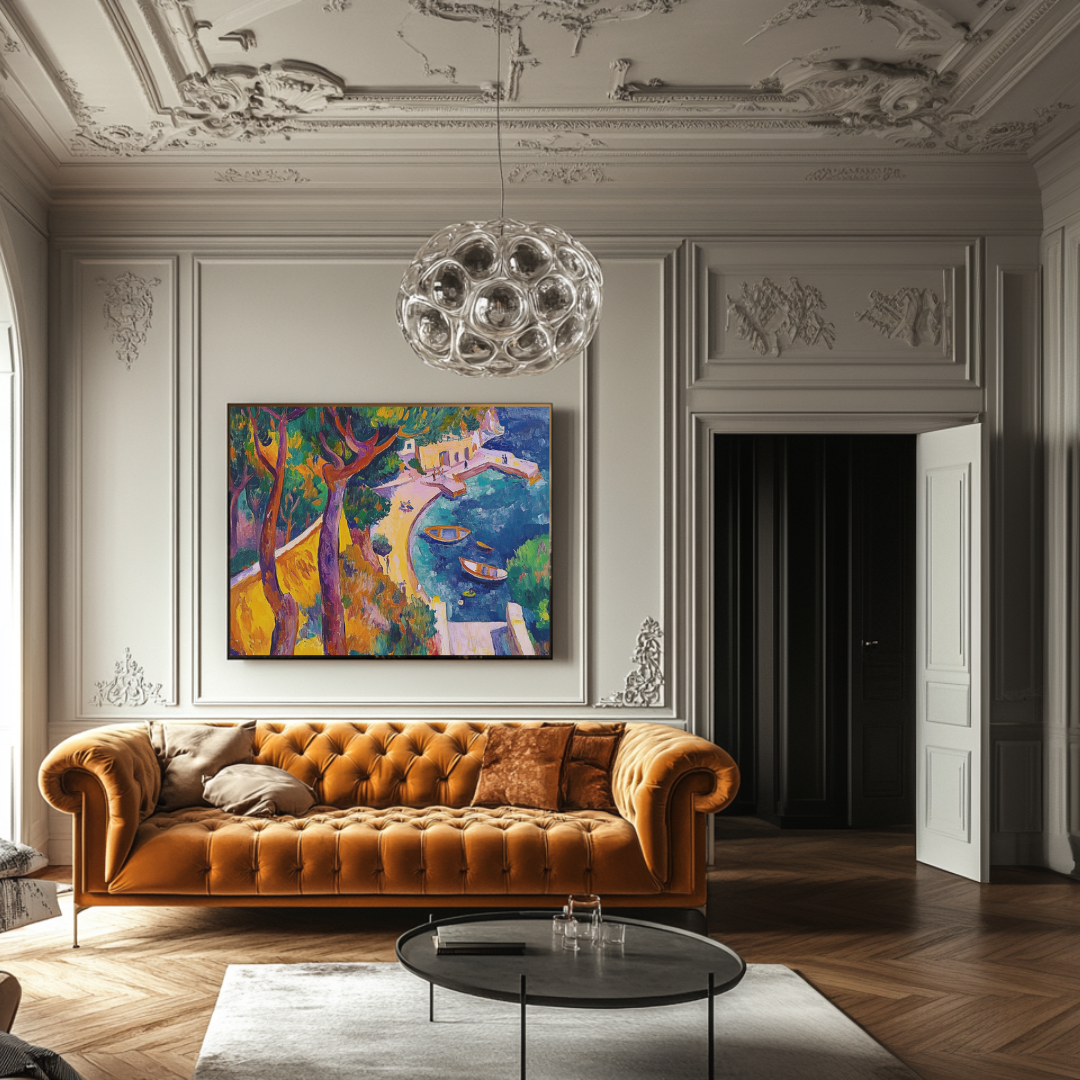
What’s around it? A sofa, a fireplace, a doorframe, a window. Art doesn’t hang in isolation — it hangs in relation to everything else in the room. A piece that looks beautiful in a white studio photograph may look completely wrong above a dark velvet sofa or next to a terracotta wall.
What light does it get? North-facing rooms with cool, indirect light read differently from south-facing rooms flooded with warm afternoon sun. Strong direct light can bleach out very pale works. Low light can swallow dark ones. Think about how your room actually looks at the time of day you spend most time in it.
Once you’ve looked honestly at the wall, choosing art becomes much simpler.
Size: Get This Right and Everything Else Is Easier
If there’s one rule worth following when it comes to how to choose wall art, it’s this: most people hang art too small.
A piece that feels bold and significant in a shop or on a screen often disappears on a real living room wall. The wall wins. Scale matters far more than most people expect.
A useful guide:
- For a wall above a sofa, the artwork should ideally be around two-thirds the width of the sofa — not wider, but substantial enough to feel anchored rather than floating
- For a feature wall with no furniture below it, a single large canvas of at least 100 cm on its longest side will typically read with more confidence than multiple small pieces
- For a narrow wall or alcove, a vertical format — taller than it is wide — follows the architecture rather than fighting it
When in doubt, cut a piece of paper or card to your intended canvas size and tape it to the wall. Live with it for a day. You’ll immediately know if it’s too small, too large, or exactly right.
For specific measurements and placement rules for living rooms, see large canvas art for living rooms: sizing, placement, and budget.
Colour: Work With What You Already Have
You don’t need to match your art to your sofa. You don’t need to match it to anything, exactly. But the art should converse with the room — not ignore it and not clash with it.
A practical approach:
Pick up a colour that already exists in the room, but give it more intensity in the artwork. If you have warm caramel tones in your wooden furniture, art that moves into deep amber or burnt sienna will feel connected. If your room is built on grey-blue neutrals, artwork with deeper, more saturated blues and greens will feel like a natural evolution rather than a random intruder.
Contrast works too — but deliberately. A room of warm neutrals — cream, sand, terracotta — can handle a piece of art with cool, deep blues or forest greens as a counterpoint. This creates energy rather than monotony. What doesn’t work is random contrast — a bright graphic print dropped into a considered, calm interior because you liked it on the website.
Neutral rooms are the easiest starting point. If your living room is built on white, off-white, or warm linen tones, you have genuine freedom. Almost any palette works. The question becomes what mood you want the art to introduce.
Style: Modern Wall Art Ideas for Contemporary Living Rooms
You don’t need to know the name of every art movement to make a good choice. But it helps to have a rough sense of what you’re drawn to.
Abstract art is the most versatile choice for modern living rooms. It doesn’t demand narrative interpretation, it works across a wide range of interiors, and at its best it creates mood and atmosphere without competing with the rest of the room for attention.
Figurative and nature-inspired art brings warmth and humanity into a space. Female figures, botanical forms, organic shapes — these work particularly well in living rooms that already have natural materials: wood, linen, stone, rattan.
Large-scale works with bold brushwork suit high-ceilinged, contemporary spaces. The physicality of visible paint — thick impasto, gestural marks, texture that catches the light — gives a room energy and presence.
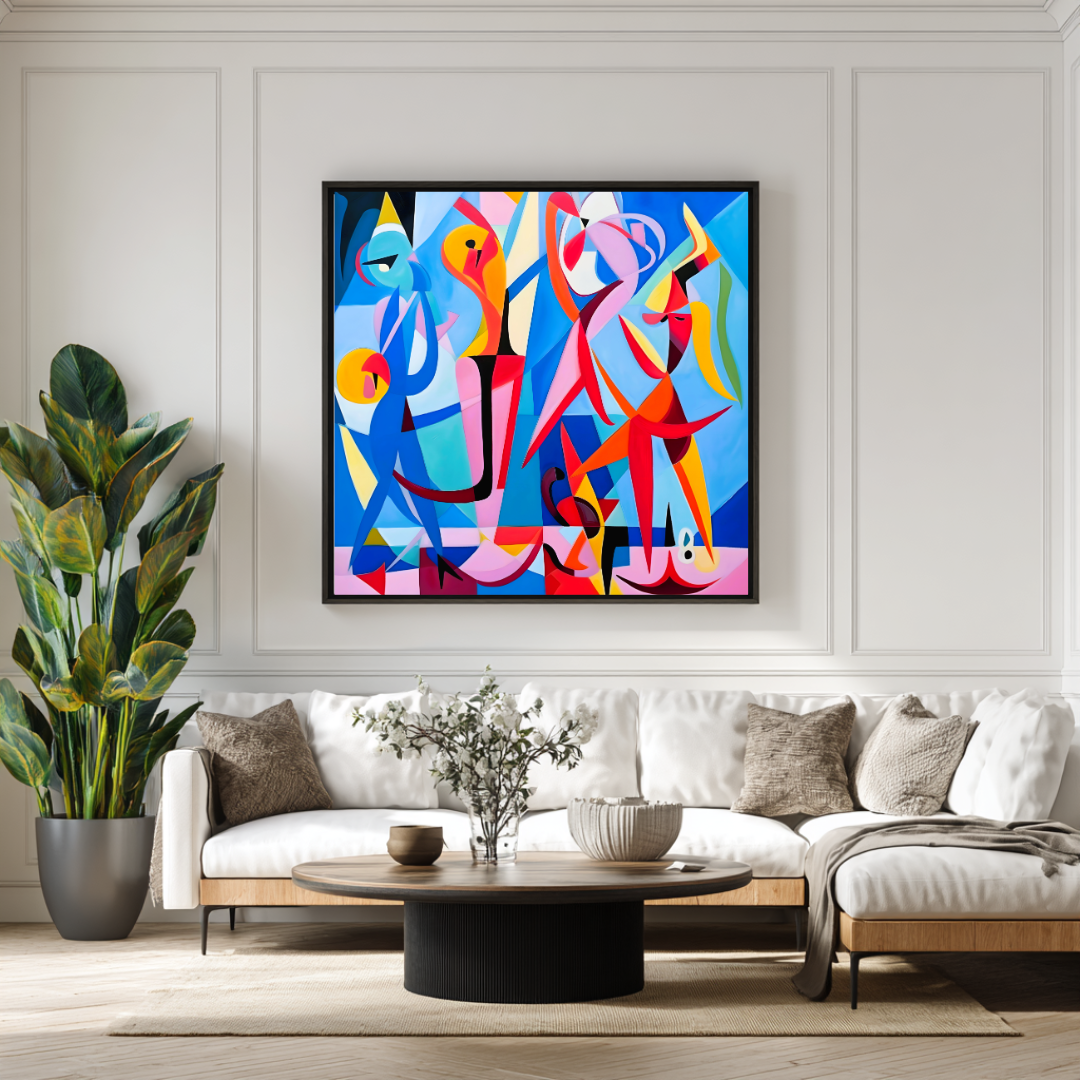 Dancing — bold figurative work for a contemporary living room
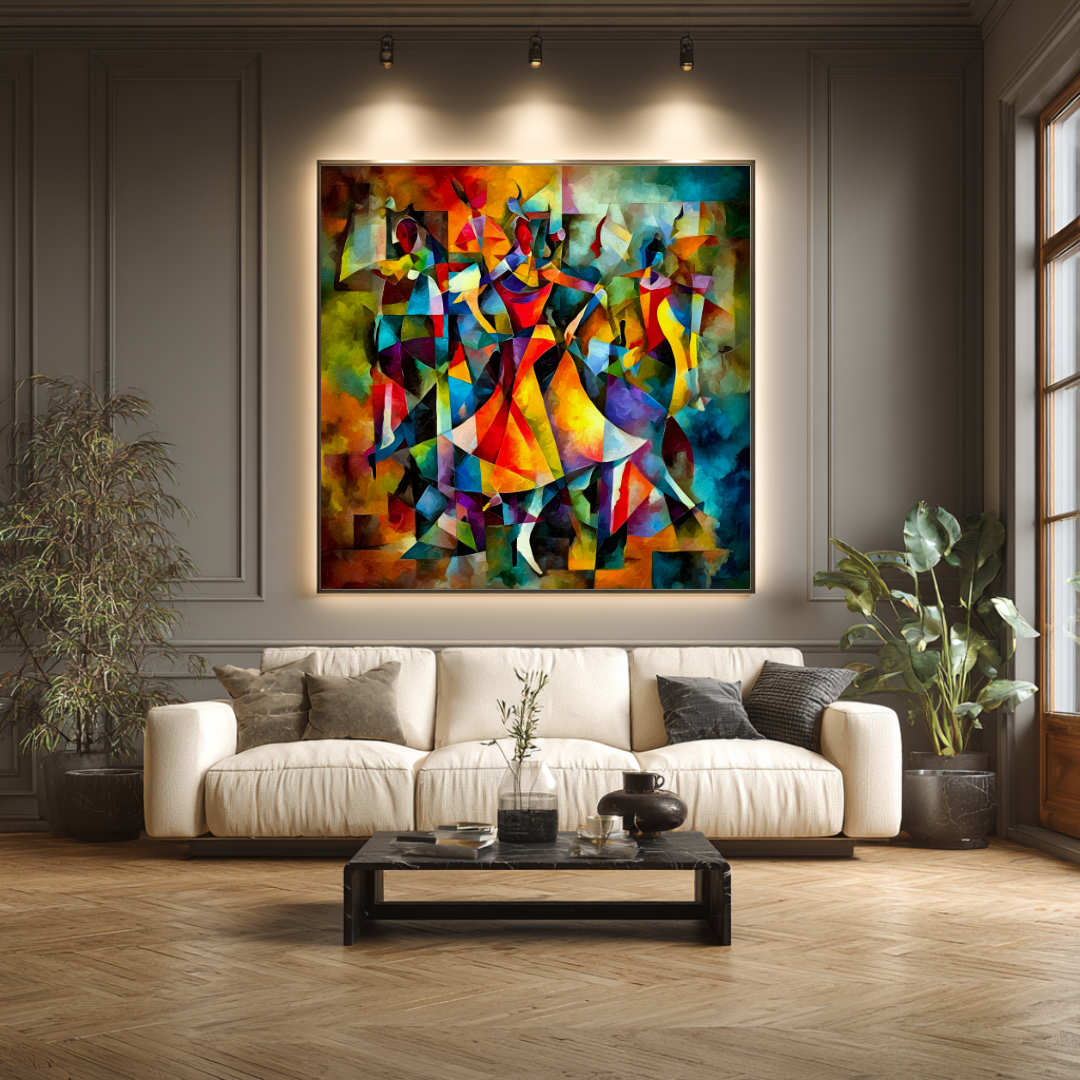 Ballroom — shown in a room setting, 120×120cm
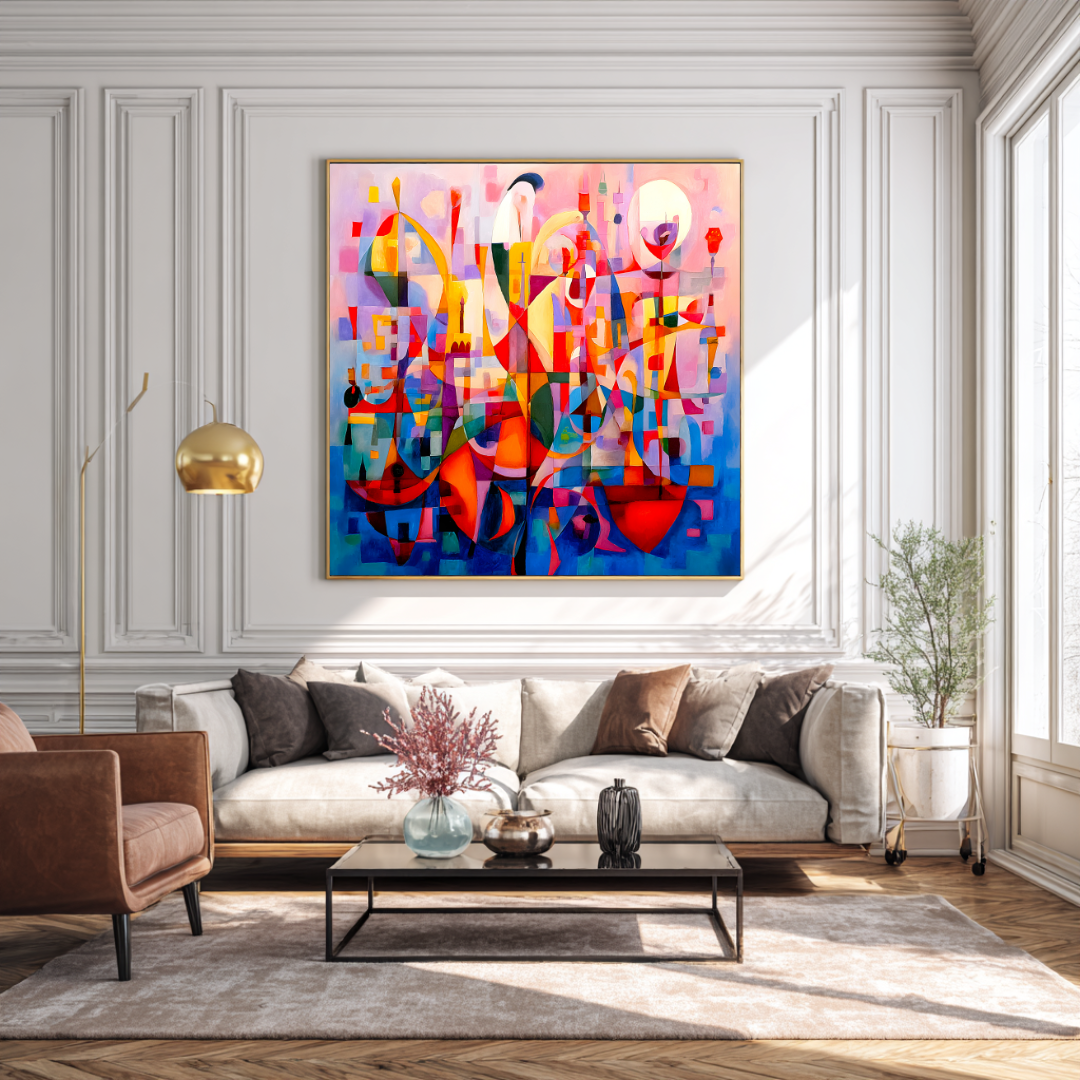 Dancers — music & performance series
One Large Piece or a Gallery Wall?
This is one of the most common questions people ask when choosing art for their living room — and the answer depends on your room, your style, and your patience.
A single large piece is almost always the stronger choice for a main living room wall. It reads clearly, it makes a statement, and it’s much easier to get right. One well-chosen canvas anchors a room in a way that a collection of smaller pieces rarely achieves.
A gallery wall works best when you already have a collection of pieces you love and want to display together — not when you’re starting from scratch and hoping that multiple smaller purchases will add up to something.
If you’re drawn to the idea of a gallery wall but don’t have an existing collection, start with one significant piece you love. Let the collection grow around it over time. The wall will be better for it.
A Simple Framework for Making the Decision
If you’re still feeling stuck, run through these four questions:
- What size does this wall actually need? (Measure it, then err on the side of larger)
- What mood do I want this room to have? (Calm? Energetic? Warm? Airy?)
- What colours already exist in this room that the art should respond to?
- Do I want something I’ll still love in ten years — or something that fills the wall for now?
The last question is the most important one. Rooms change. Furniture changes. Art that you genuinely love — that you chose carefully and invested in properly — stays right through all of it.
Frequently Asked Questions
How do I know what size art to buy for my living room?
Measure the wall first, then measure the furniture below it if applicable. As a rule of thumb, a piece above a sofa should be roughly two-thirds the sofa’s width. For a standalone wall, a canvas of at least 90–100 cm on its longest side will typically read with presence in most living rooms. When uncertain, go larger — you can almost always rehang, but you can’t make a painting bigger once it’s on the wall.
Should art match the sofa or the curtains?
Not exactly — but it should belong in the same conversation. Pull a colour from the room and let the artwork develop it rather than simply repeat it. If everything matches perfectly, the room tends to look styled rather than lived in. If nothing relates, it looks chaotic. The goal is coherence with a little tension.
Is original art worth it compared to prints?
For your main living room wall — the one you look at every day — yes. The difference in how an original painting reads in a real room, under real light, is significant. For secondary spaces, guest rooms, or when budget is a genuine constraint, high-quality artist-made prints are the intelligent alternative.
How high should I hang art in a living room?
The standard guidance is to hang with the centre of the artwork at eye level — roughly 145–150 cm from the floor. Above a sofa, leave about 15–20 cm of space between the top of the furniture and the bottom of the frame. The most common mistake is hanging too high — art that floats near the ceiling feels disconnected from the room.
If you’re looking for something bold and original for your living room, you can explore Marta Ellie’s canvas print collection here — original paintings reproduced to archival quality, signed and available in multiple sizes.
Looking for something made specifically for your space? Commission an original painting designed around your room, your palette, and your vision.
From the collection
Prints related to this guide
Limited editions of 20 · Giclée on 365 g/m² canvas · Signed by Marta Ellie
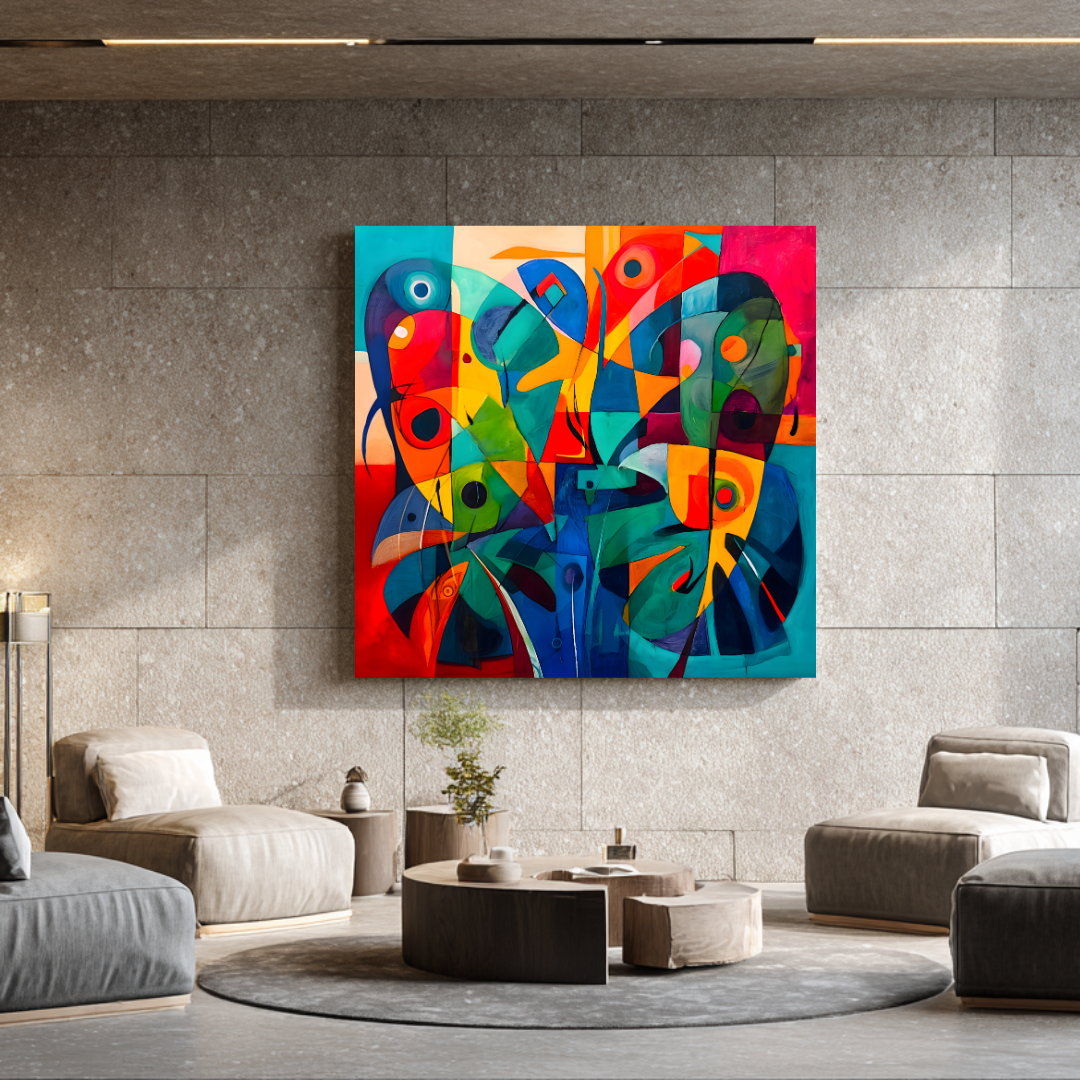
Abstract & Modern
Metamorphosis
€325
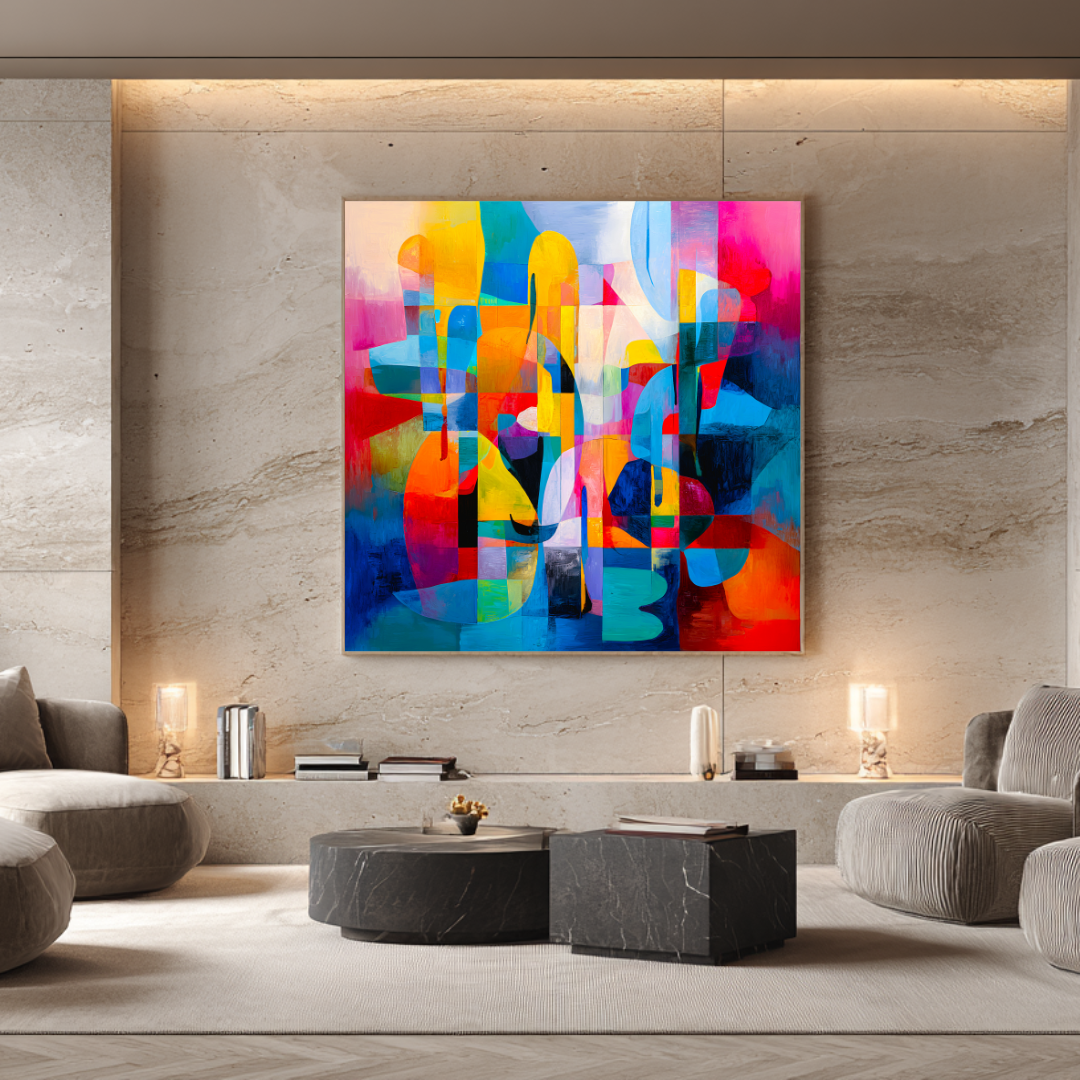
Abstract & Modern
Dreams
€300
Coastal & Mediterranean
Harbor of Dreams
€350
Read next
Ready to find yours?
Museum-quality prints, from €300.
Limited editions of 20. Giclée on 365 g/m² canvas. Shipped worldwide.
More articles