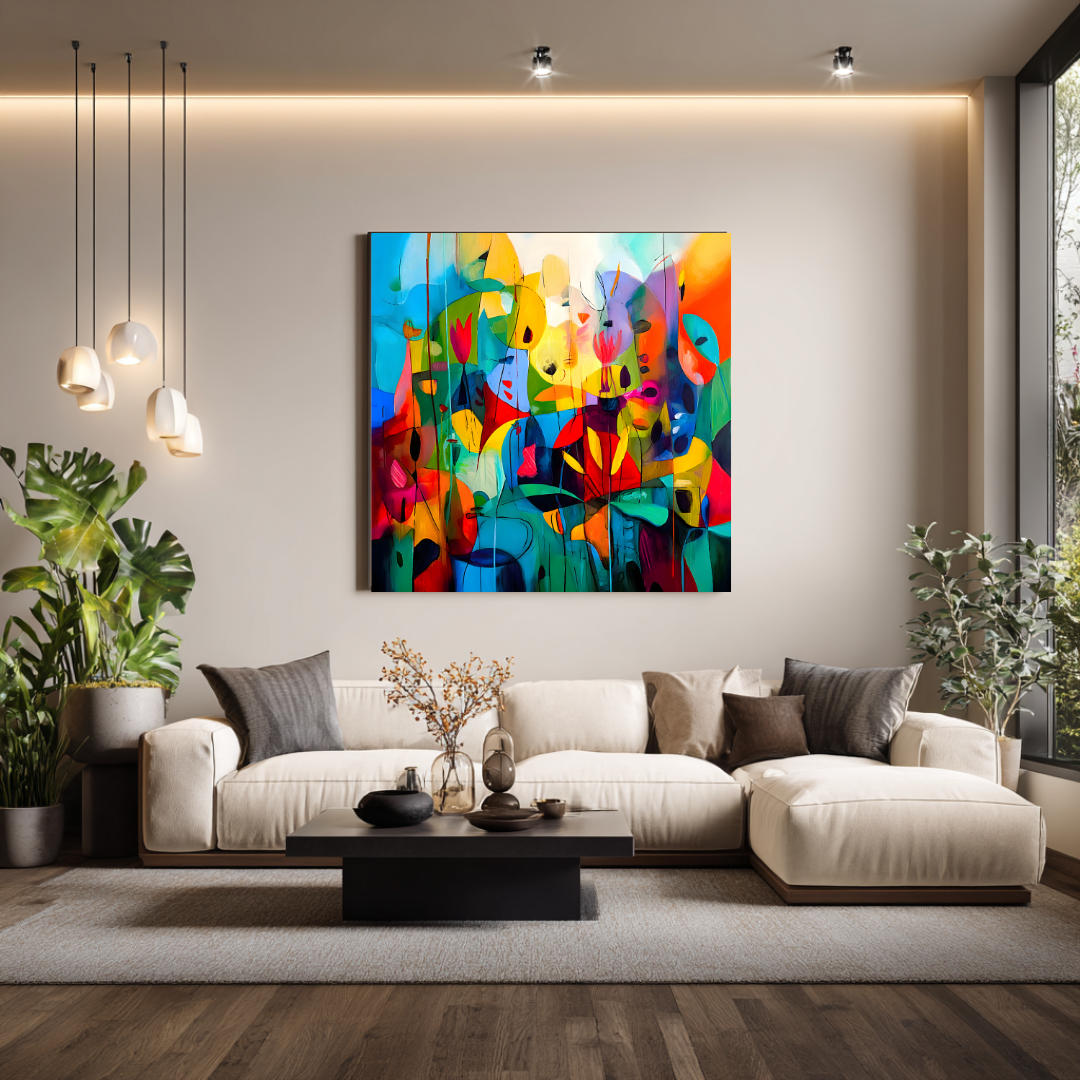
Buying Guide
Understanding Art as Personal Expression: How to Buy Pieces That Feel Like You
11 April 2026
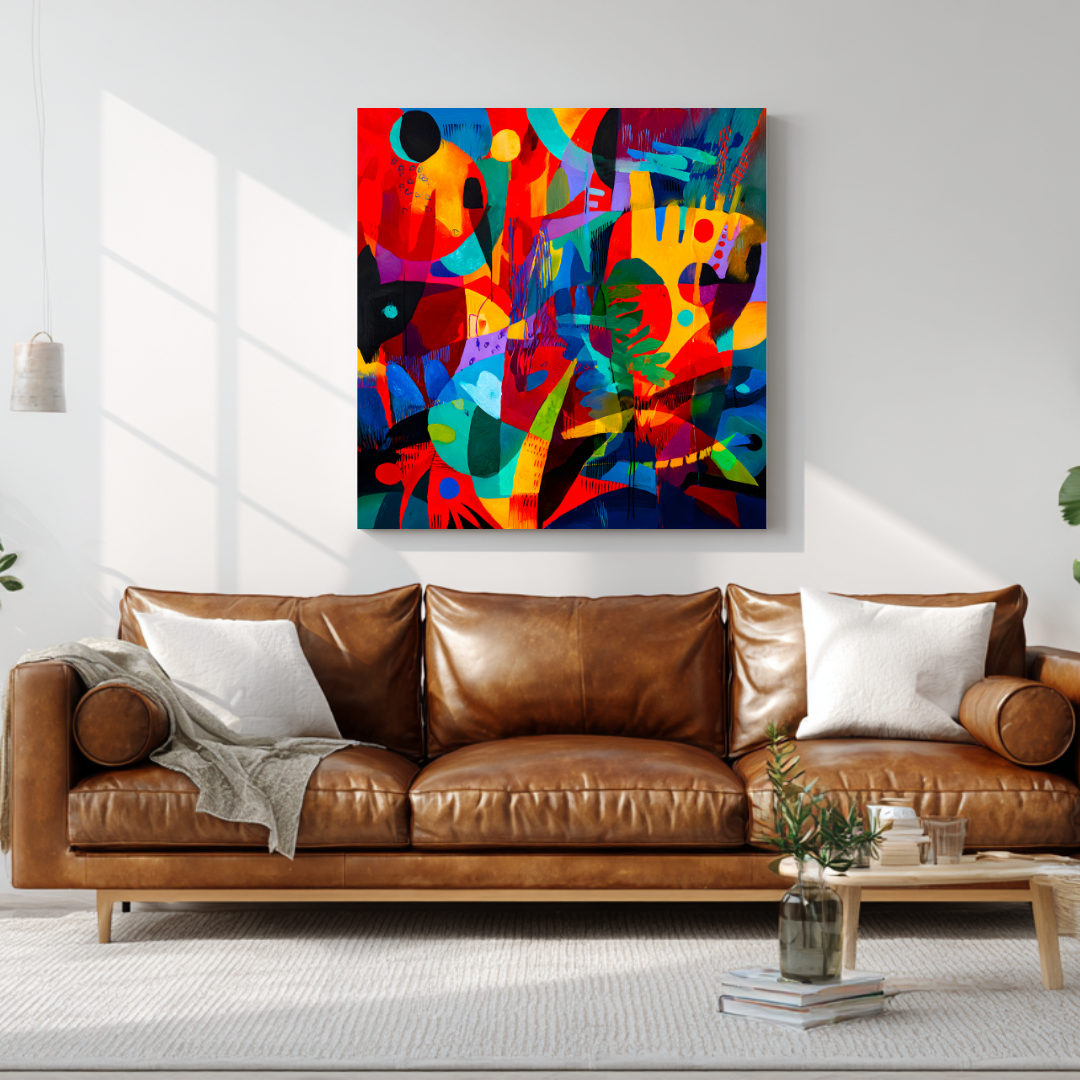
People often treat buying art like a decorating task. Match the sofa. Fill the wall. Move on.
But the best art purchases never work like that.
They work because the piece says something personal about you: what calms you, what energises you, what memories matter, what kind of life you want to build at home.
That is personal expression in art. And when you use it as your guide, buying becomes much easier.
Table of Contents
- What personal expression in art really means
- How this changes the way you buy
- A simple 4-step method
- What to avoid
- FAQ
What personal expression in art really means
Personal expression in art is not about explaining art history terms.
It is about choosing work that reflects your inner world: your values, your rhythm, your emotional taste.
A quiet abstract seascape and a vivid figurative dance scene can both be “right”. The question is not which is objectively better. The question is which one feels true in your space.
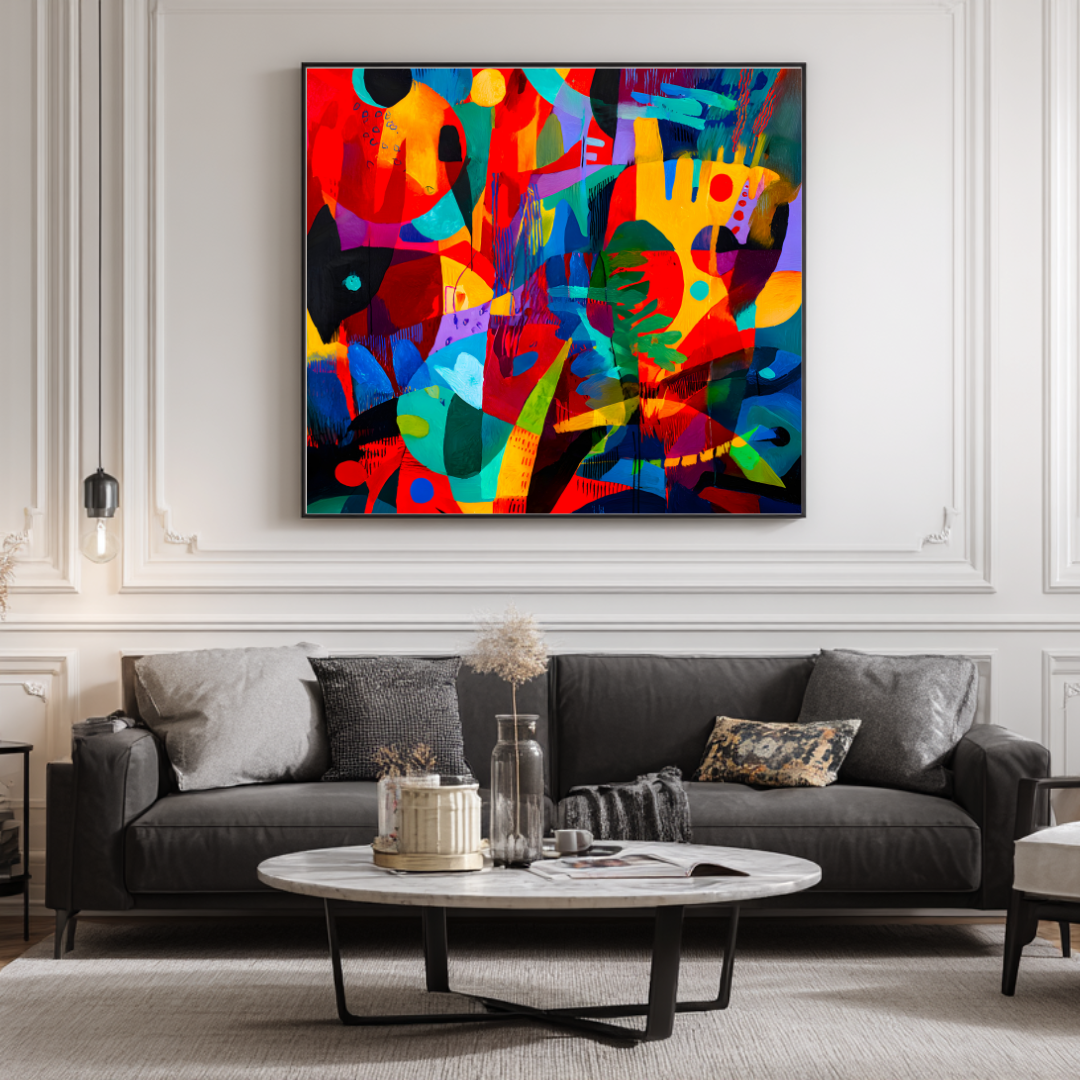 Illusions — for homes that want energy, rhythm, and movement.
How this changes the way you buy
When buyers focus only on trend, they replace art quickly.
When buyers focus on expression, they keep art for years.
Why? Because the piece still feels aligned after furniture changes, paint changes, even house changes.
If you’re deciding between two works, ask:
- Which one creates the mood I want to live with daily?
- Which one still feels right if trends change next year?
- Which one tells guests something honest about me?
That is the bridge from philosophy to buying. You are not buying “wall filler.” You are choosing a visual statement of identity.
A simple 4-step method
1) Name the feeling first
Before you browse, write three words for the room: for example calm, expansive, grounded.
Those words are your filter.
2) Choose scale with intention
If you want confidence, go bigger. Most rooms improve with one substantial piece instead of several small ones.
For statement areas, limited-edition giclée canvas prints in larger formats tend to read with more presence than small framed prints.
3) Pick palette by emotion, not matching
Instead of matching cushions exactly, choose colours that support your feeling words.
- Soft neutrals and coastal blues: calm, open, reflective
- Deep reds and ambers: warmth, sensuality, drama
- High contrast black/white + accent colour: modern, focused, bold
4) Buy for longevity
Museum-quality materials, archival inks, and limited editions are practical choices, not just luxury language.
At Marta Ellie, prints are produced as museum-quality giclée canvas editions (20 per size), typically from €300 to €500. They are made to stay beautiful long term, not just look good online.
What to avoid
- Buying only because a piece is currently fashionable
- Choosing art that is too small for the wall
- Ignoring quality details (canvas, ink, edition size)
- Delaying for months because you are waiting for “perfect certainty”
A strong, meaningful decision beats endless hesitation.
FAQ
Is buying prints still personal expression in art?
Absolutely. Personal expression is about what you choose and why, not whether the work is a print or original. High-quality, limited-edition prints can carry real emotional and visual impact.
How do I know if a piece is truly “me”?
Use the 24-hour test: shortlist one piece, look at it morning and night for a day, and notice whether you feel more connected or less. Your reaction is usually clear.
Should I start with prints or commission an original?
If you want a faster decision and a defined budget, start with prints. If you want a work designed around your exact room, palette, and scale, commission an original.
Deep-Dive: A Real Buyer Framework You Can Use This Week
If you want this article to be useful in real life, not just inspiring to read, use this practical framework over the next seven days. It is built for people who are busy, visually sensitive, and unwilling to buy art they will regret in six months.
Day 1: Audit the room honestly
Stand in the room at three different times: morning, late afternoon, and evening. Note what changes. In many homes, the art decision fails because the buyer only evaluates the wall in one lighting condition. A piece that looks perfectly balanced at noon may feel heavy at night. A calm palette can become dull if the room receives little natural light.
Write down what the room currently feels like and what you want it to feel like. Be concrete. “I want it to look nice” is not useful. “I want the room to feel calmer after work, but still elegant when guests arrive” is useful.
Day 2: Define non-negotiables
For personal expression in art, clarity beats endless browsing. Define your constraints before you look at products:
- Minimum size range that will hold visual weight on the wall
- Maximum budget you are comfortable spending now
- Palette boundaries (warm, cool, neutral + one accent)
- Format choice (canvas print, framed work, original, diptych)
- Deadline (if this is for a move-in, event, or renovation phase)
When buyers skip this step, they make emotional decisions on random pieces that do not fit their space. Constraints are not restrictive; they are the reason you can choose with confidence.
Day 3: Build a shortlist of three, not thirty
Most decision fatigue comes from too many options. Shortlist three strong candidates only. Place them side by side and score each on five factors:
- Mood fit (does it create the emotional tone you intended?)
- Scale fit (does it hold the wall without overpowering?)
- Colour fit (does it connect to the room without becoming flat?)
- Longevity (will you still respect this piece in five years?)
- Quality confidence (materials, process, edition transparency)
Use a simple score from 1 to 10 per category. Numbers do not replace intuition, but they stop intuition from drifting.
Day 4: Test in context
Bring references into the real room. Tape measured paper templates on the wall. View digital mockups on your phone from the actual sofa or doorway. Ask one trusted person for feedback, not ten. Too many opinions pull you away from your own criteria.
This is especially important in living room, hallway, and dining area, where sightlines and furniture proportions change the reading of artwork from different positions.
Day 5: Review quality like a collector
Before checkout, verify details that determine long-term satisfaction:
- Print method or painting medium
- Canvas/fabric/paper quality
- Stretching and finishing standards
- Edition size and authenticity details
- Shipping protection and return policy
Even at accessible price points, these details separate work that matures well from work that ages quickly.
Day 6: Place and style with intention
Installation changes perception more than people expect. A strong piece hung too high can feel disconnected. A correct-height placement can make a room feel professionally composed.
Use these practical placement rules:
- Centre line near eye level (approximately 145–150 cm)
- Above furniture, keep roughly 15–20 cm gap
- Let the art occupy meaningful visual width on key walls
- Repeat one colour from the artwork in textiles or objects for cohesion
You do not need perfect symmetry. You need deliberate visual relationships.
Day 7: Final check — emotional and practical
Ask two final questions:
- Do I feel better in this room with this piece present?
- Do I trust the build quality enough to live with it long term?
If both are yes, buy. If either is no, refine and continue.
Common Mistakes That Cost Buyers Time and Money
Mistake 1: Buying too small
The most frequent mistake across price ranges. Small art on a large wall reads as indecision. If you are unsure between two sizes, the larger option is often the right move for statement areas.
Mistake 2: Matching everything exactly
Exact matching removes life from a room. Better approach: coordinate one or two tones and allow controlled contrast. This creates depth and visual maturity.
Mistake 3: Confusing trend with fit
A trend can inspire you, but it should not make the decision for you. The right test is always contextual: does this piece support the life of this specific room in this specific home?
Mistake 4: Ignoring maintenance and light
Direct sun, humidity shifts, and poor installation hardware can damage artwork over time. Think about placement conditions early, not after purchase.
Mistake 5: Waiting for certainty forever
Good decisions are informed, not perfect. If a piece scores highly on mood, scale, and quality, decide. Empty walls rarely improve a room.
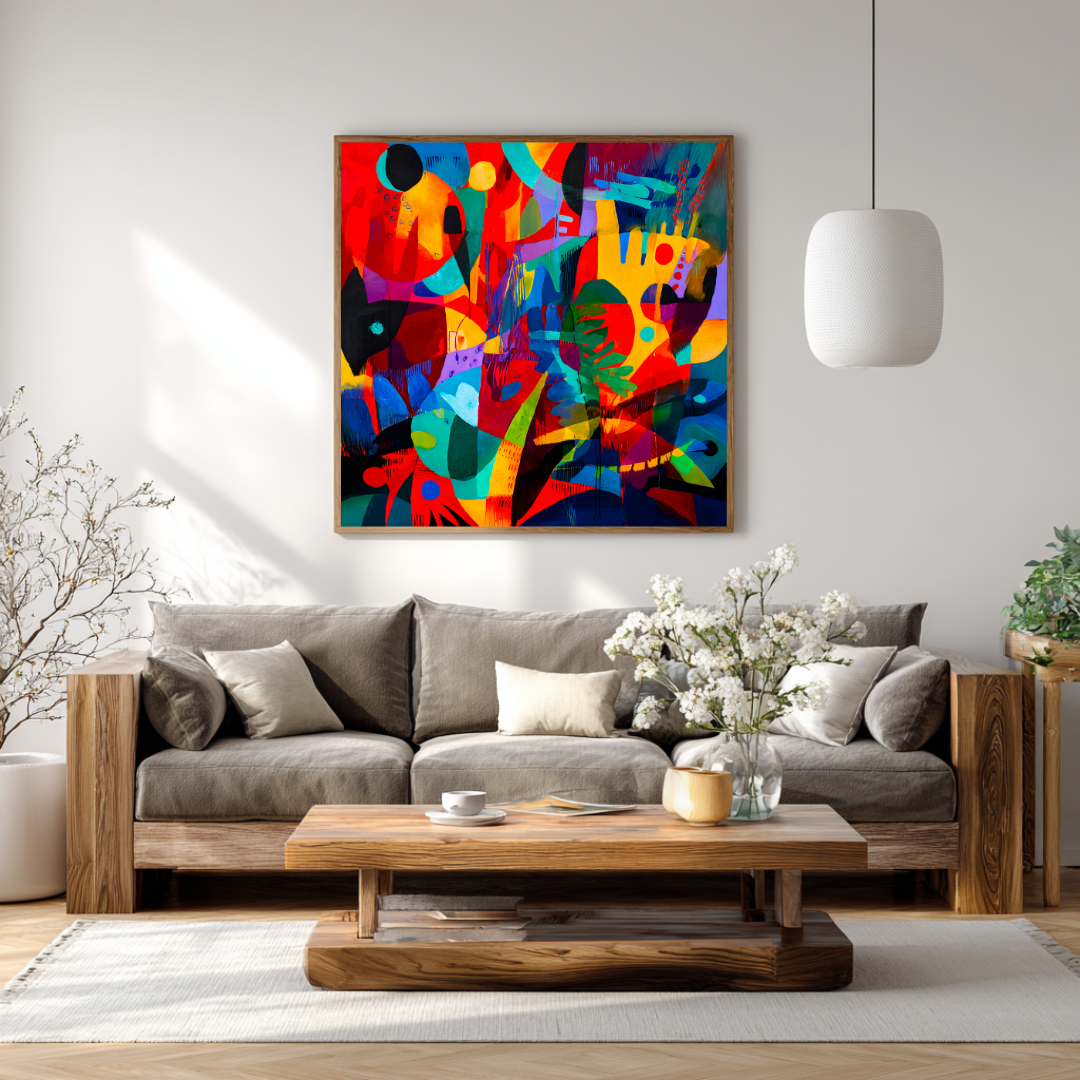 A detail view that helps assess composition, texture, and room fit before buying.
Budget Planning Without Guesswork
A practical budget ladder helps you decide faster:
- €300–€500: museum-quality limited-edition giclée canvas prints; ideal for first meaningful acquisition
- €600–€1,500: larger formats, premium framing combinations, or multi-piece concepts
- €3,000–€9,000+: commissioned originals tailored to architecture, palette, and emotional brief
The “best” tier is the one that fits your timeline, wall importance, and collecting goals. Many buyers start with a print for the main wall, then commission an original when they know exactly what atmosphere they want in the space.
How to Talk About Art at Home (Without Pretending to Be an Expert)
You do not need art-school language to choose well. Use plain, useful questions with your partner, family, or designer:
- What feeling should this room give us most days?
- Do we want this wall to be calm, dramatic, or conversational?
- Are we choosing this because we love it or because we are afraid to choose?
- Will this still feel like us in three to five years?
These questions move the conversation from taste anxiety to clear decisions.
Key Takeaways
- personal expression in art becomes practical when you define mood, size, and quality before browsing.
- Buy for room impact and long-term fit, not short-term trend pressure.
- Use measured templates, shortlist discipline, and quality checks to avoid expensive mistakes.
- One strong piece placed correctly often transforms a space more than multiple smaller purchases.
- If you want confidence now, start with a limited-edition print. If you want total personalisation, commission original work.
Extended Examples and Practical Scenarios
To make the guidance more concrete, here are real-world scenarios that mirror the decisions most buyers face.
Scenario A: “The wall is large and I am afraid of making a costly mistake”
This is common in new apartments and renovated homes. The buyer knows a small piece will look weak but worries that a large piece will dominate the room. The solution is to test proportion before purchase with a paper mockup at full size. Live with it for two days. Sit on the sofa. Walk through the room at night. If the scale still feels strong but balanced, you have removed the biggest risk.
Scenario B: “My partner and I like different styles”
Instead of debating taste categories, agree on desired room feeling and one shared palette anchor. For example: “calm but not boring” and “include one warm earth tone.” Once those are set, many style disagreements disappear because both people are now evaluating fit, not defending preferences.
Scenario C: “I want my home to feel premium without looking staged”
Premium spaces are usually built on three things: appropriate scale, quality materials, and visual restraint. You do not need many pieces. You need the right piece, installed correctly, with breathing room around it. This is exactly why one museum-quality canvas on a key wall often outperforms a crowded arrangement.
Scenario D: “I like the art online, but I am unsure in my room”
Request additional context images and compare the piece against your own lighting and furnishing tones. If uncertainty remains, shortlist two works and choose the one that still feels right the next morning. Overnight clarity is underrated in art buying.
Installation and Care Checklist
A good purchase can be undermined by poor installation or maintenance. Use this quick checklist:
- Confirm wall type (plasterboard, brick, concrete) before choosing anchors
- Use a level; small alignment errors are surprisingly visible
- Keep direct prolonged sunlight off the artwork where possible
- Avoid placing canvases near humidity extremes or direct heat vents
- Dust gently with a dry, soft cloth; avoid wet cleaning products
- Re-check hanging hardware every few months for safety
These small habits protect colour, structure, and presentation over time.
Decision Worksheet (Save This)
Before purchase, complete the worksheet below in writing:
- Room: ________
- Emotional goal for the room: ________
- Target size range: ________
- Palette direction: ________
- Preferred subject/style: ________
- Quality requirements: ________
- Budget ceiling: ________
- Buy now or wait one week: ________
If you cannot fill this quickly, do not browse yet. Define first, then choose.
Final Professional Advice
The strongest homes are not built by copying catalogues. They are built by choosing pieces that align with how people want to feel in their own space. That means committing to decisions with both heart and standards: emotional fit, technical quality, and long-term relevance.
When those three align, art stops being an accessory and becomes part of the architecture of daily life.
If you want art that reflects your taste and feels right every day, start with the collection.
Ready for something designed specifically for your home and story?
From the collection
Prints related to this guide
Limited editions of 20 · Giclée on 365 g/m² canvas · Signed by Marta Ellie
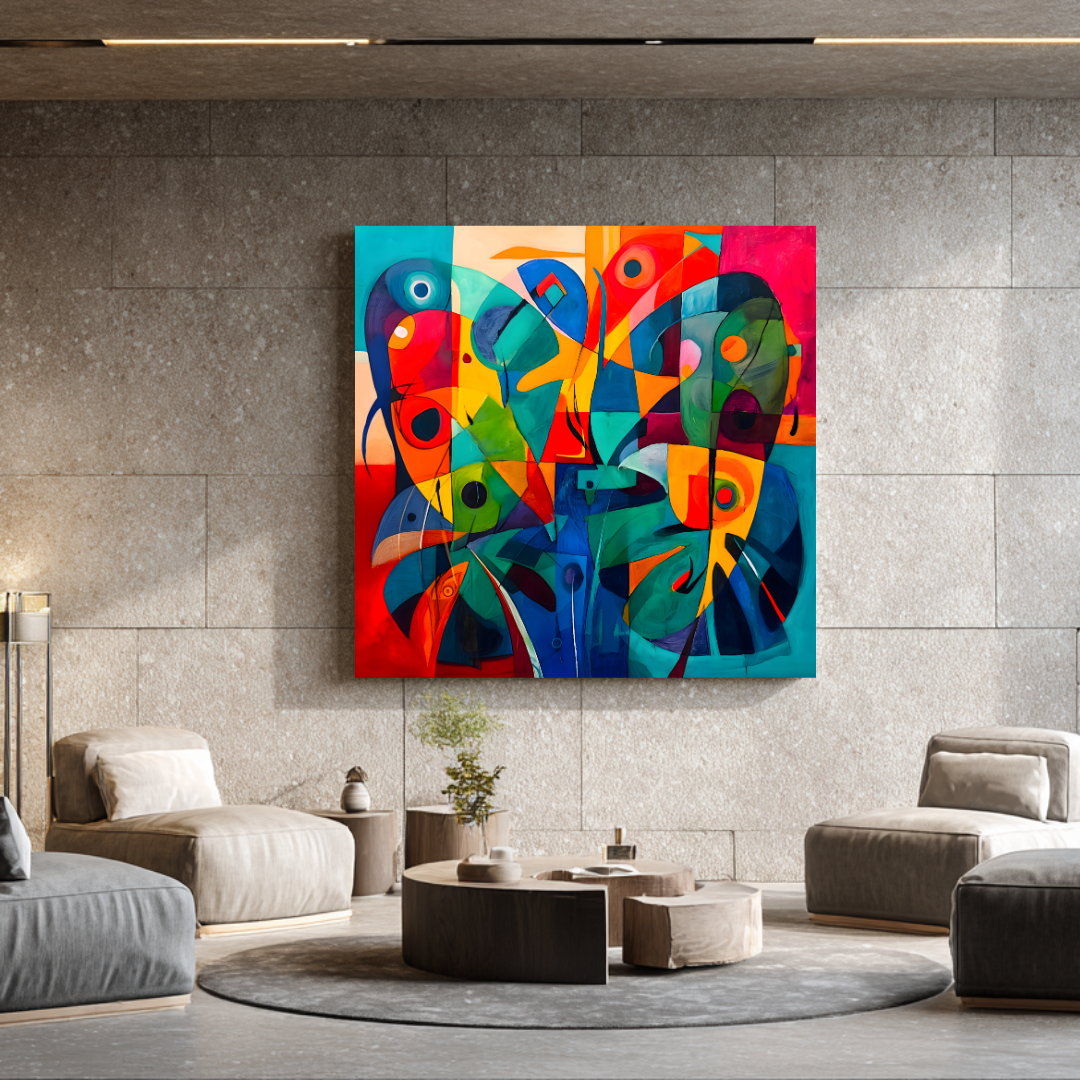
Abstract & Modern
Metamorphosis
€325
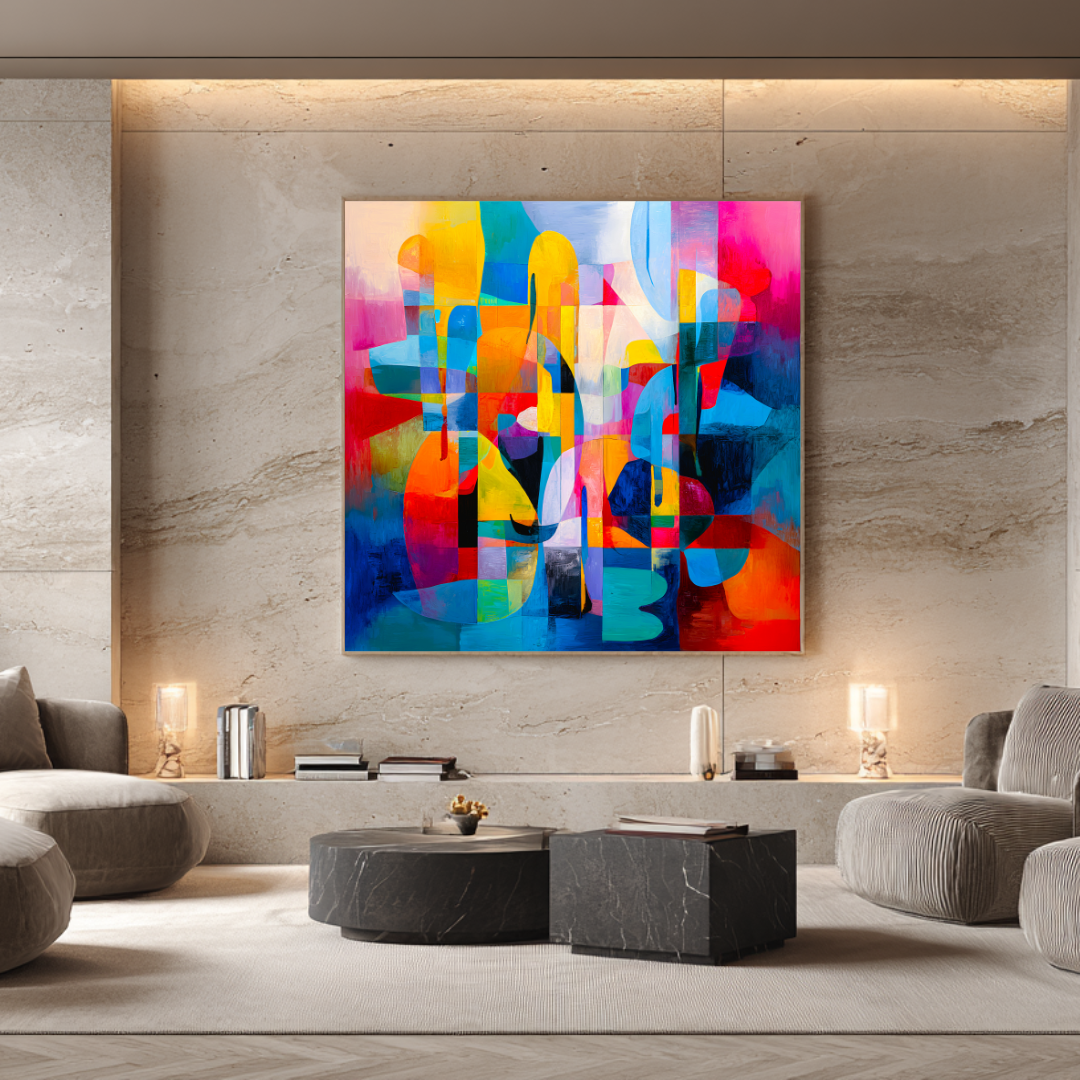
Abstract & Modern
Dreams
€300
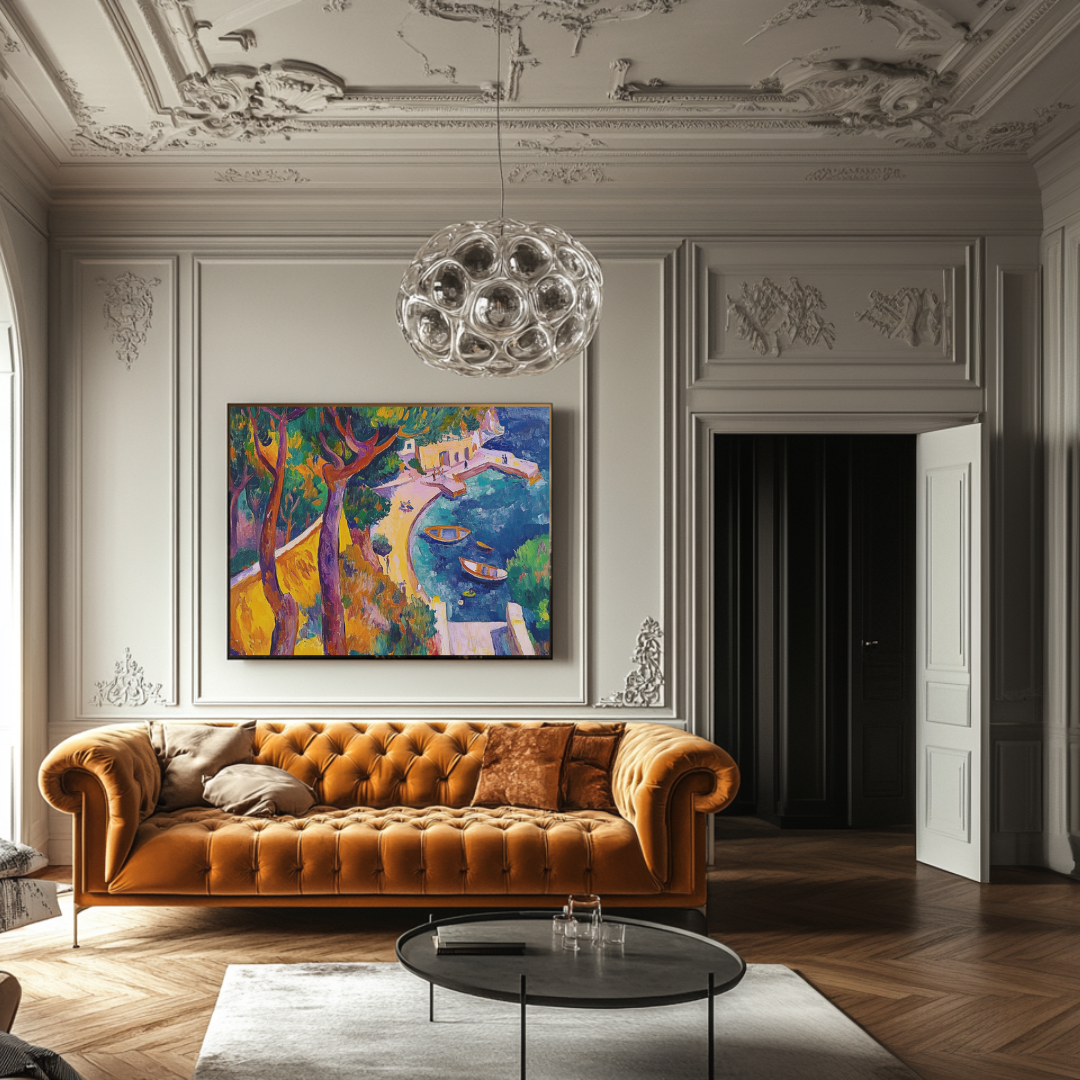
Coastal & Mediterranean
Harbor of Dreams
€350
Read next
Ready to find yours?
Museum-quality prints, from €300.
Limited editions of 20. Giclée on 365 g/m² canvas. Shipped worldwide.
More articles